Skilled Trade Workers in High Demand Across Australia
Australia’s economy continues to rely heavily on skilled trades to support its housing, infrastructure, and manufacturing sectors. As population growth drives new construction projects and regional development, the country faces a serious shortage of qualified trade professionals. Among the most in-demand are plumbers, welders, and metal fabricators, occupations that are essential to keeping Australia’s cities and regional communities running.
According to Jobs and Skills Australia (2024), nearly 50% of construction-related employers reported difficulty finding qualified workers, with the shortage most evident in regional and remote areas. The demand for plumbers and welders in particular has remained consistently high, with projected growth across all states from 2023 to 2028.
To address these shortages, the Australian Government continues to expand its Skilled Migration and Regional PR programs, encouraging overseas professionals and international graduates to build their careers outside major cities. For skilled workers from Indonesia, these trades offer a practical and achievable pathway to both stable employment and Permanent Residency (PR) in Australia.
With the right qualifications, skills assessment, and regional placement, trade professionals can secure rewarding careers while contributing to Australia’s growing workforce needs.
Related reading:
Australia Skilled Migration vs Employer Sponsored PR – Which Is Better?
Why Trade Workers Are in Demand in Regional Australia
Australia’s regional and rural areas are experiencing a sustained shortage of qualified tradespeople across multiple industries. The construction, mining, and manufacturing sectors continue to expand, creating thousands of new roles that cannot be filled locally. As a result, plumbers, welders, and metal fabricators have become some of the most urgently needed occupations on Australia’s Skilled Occupation Lists, particularly under the Medium and Long-Term Strategic Skills List (MLTSSL) and Regional Occupation List (ROL).
Data from Jobs and Skills Australia (2024) shows that trade-based occupations consistently record some of the highest vacancy rates in the country. For example:
- The plumbing sector is expected to grow by 12.5% between 2023 and 2028, driven by housing demand and infrastructure upgrades.
- Employment for welders and metal fabricators is projected to increase by around 9% over the same period, with particularly strong demand in regional mining and manufacturing hubs.
- The construction industry overall employs more than 1.3 million workers, yet continues to report persistent shortages, especially in Western Australia, Queensland, and South Australia.
A 2024 national labour survey revealed that four out of five regional employers in construction and engineering fields reported difficulty hiring qualified trade professionals. These shortages have led many regional businesses to sponsor overseas workers under employer-sponsored visas such as Subclass 482 and Subclass 494.
For international trade workers, this shortage presents a practical opportunity. Working in regional Australia not only offers competitive wages and job stability but also provides additional migration benefits, including extra PR points and priority eligibility for State or Territory nomination.
Related reading:
Australia Regional Migration Pathways
Top High-Demand Jobs That Can Lead to PR in Australia
Overview of Trade Occupations and Daily Work
Australia’s skilled trade sector includes a range of technical professions that combine hands-on expertise with strict safety and quality standards. Among the most critical are plumbers, welders, and metal fabricators, each playing a vital role in infrastructure, construction, and industrial development.
Plumbers are responsible for installing, maintaining, and repairing systems that deliver clean water, gas, and waste removal. Their work covers residential, commercial, and industrial projects, ensuring that all plumbing and drainage systems operate efficiently and safely. In Australia, plumbing is a licensed trade, which means workers must complete formal training and certification to meet regulatory standards.
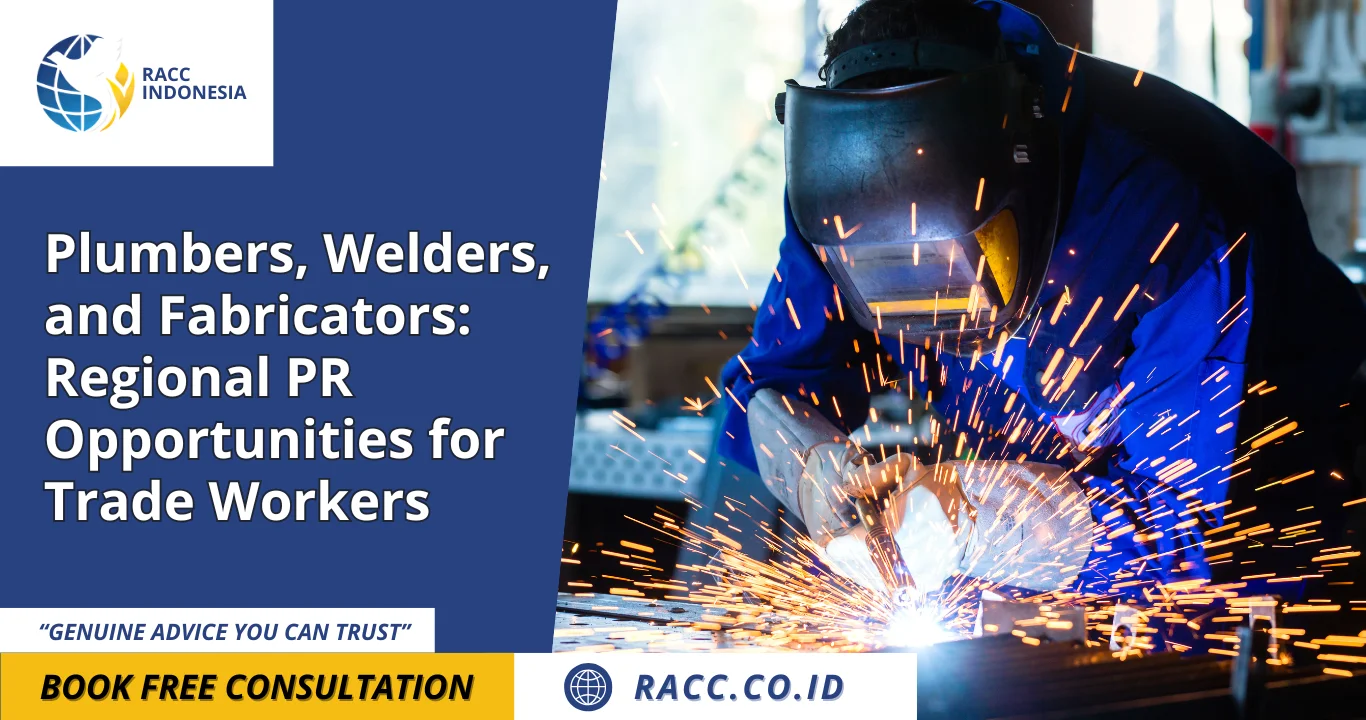
Welders work primarily with metals, joining and repairing steel structures, pipes, and machinery through specialized welding techniques such as MIG, TIG, and arc welding. They are indispensable in industries like construction, shipbuilding, and mining. Skilled welders are also required for advanced manufacturing projects that support Australia’s renewable energy and transportation sectors.
Fabricators design, cut, and assemble metal components for use in machinery, vehicles, and buildings. This trade requires strong technical skills, blueprint interpretation, and precision in using modern fabrication tools. Fabricators often collaborate with engineers and construction teams to build custom structures and equipment.
These occupations not only offer hands-on, practical work but also provide clear opportunities for professional advancement. Experienced tradespeople can progress into supervisory roles, start their own contracting businesses, or move into training and education roles within the VET sector.
With consistent demand and career diversity, these trades are considered among the most stable and future-proof occupations for skilled migrants seeking long-term employment in Australia.
Study and Skill Assessment Pathways
Becoming a qualified trade worker in Australia requires a combination of formal training, skills assessment, and, in many cases, licensing. For international students and skilled workers from Indonesia, there are multiple education and migration pathways available depending on prior experience and qualifications.
Study Pathways for Students
Many students begin by enrolling in Vocational Education and Training (VET) or TAFE programs that provide nationally recognised qualifications. These include:
- Certificate III in Plumbing
- Certificate III in Engineering – Fabrication Trade
- Certificate IV in Engineering
These programs focus on practical, workplace-based learning and are offered across Australia, including at regional campuses that qualify for additional migration benefits. Students who complete their studies in regional areas may receive extra PR points and extended post-study work rights under the Post-Study Work Visa (Subclass 485).
Training through VET or TAFE is designed to meet Australia’s industry standards, meaning graduates are eligible to apply for licensing or skilled migration assessments once they gain sufficient experience.
Skills Assessment for Migration
For those who already have work experience in plumbing, welding, or fabrication, Australia requires a skills assessment through Trades Recognition Australia (TRA) or another approved assessing authority. This process evaluates whether an applicant’s qualifications and practical experience meet Australian trade standards.
Applicants with several years of relevant work experience may also qualify through Recognition of Prior Learning (RPL), allowing them to fast-track the assessment process without repeating full-time study.
Licensing and Work Readiness
Certain trades, such as plumbing and electrical work, require state-specific licenses to ensure compliance with safety and regulatory requirements. Completing an Australian qualification or TRA assessment often forms the foundation for applying for these licenses.
Studying and working in a regional area not only increases employment opportunities but also strengthens eligibility for Skilled Regional Visas, making it one of the most strategic choices for trade professionals seeking long-term settlement in Australia.
Related reading:
How VET/TAFE Courses Can Lead to Permanent Residency in Regional Australia
Study, Work, and PR in Australia: Step-by-Step Pathway
Migration Pathways for Trade Workers
Australia’s migration framework provides several pathways for skilled trade workers to transition from study or work experience to Permanent Residency (PR). Occupations such as plumber, welder, and metal fabricator are consistently listed on the Medium and Long-Term Strategic Skills List (MLTSSL), making them eligible for both independent and regional migration visas.
1. Skilled Independent Visa (Subclass 189)
This visa allows qualified trade professionals to apply for PR independently, without needing state nomination or employer sponsorship. Applicants must meet the required points threshold, which is calculated based on age, English ability, work experience, and qualifications.
2. Skilled Nominated Visa (Subclass 190)
Under this program, applicants receive nomination from an Australian state or territory. Many states actively nominate trade workers to meet their local workforce shortages. This visa grants immediate Permanent Residency upon approval.
3. Skilled Work Regional (Provisional) Visa (Subclass 491)
This regional visa is one of the most accessible options for trade workers. It allows a five-year stay in designated regional areas and provides a pathway to Permanent Residency after three years of regional work and income compliance. Studying or working in a regional location also grants additional points under the Skilled Migration points system.
4. Employer Sponsored Visa (Subclass 482 → 186)
Trade professionals with job offers from Australian employers can apply for the Skills In Demand (SID) Visa – Subclass 482, which allows them to work full-time in Australia. After a qualifying period, many transition to the Employer Nomination Scheme (Subclass 186) for Permanent Residency.
5. Regional Employer Sponsored Visa (Subclass 494)
Specifically designed for regional employers, this visa allows sponsorship of overseas workers in designated areas where local skills are lacking. It provides a direct PR pathway after three years of full-time regional employment.
According to Jobs and Skills Australia (2024), employment across the construction and fabrication sectors is projected to continue rising through 2028, with thousands of new openings in regional areas. Average annual salaries for trade workers range from AUD 70,000 to 120,000, depending on experience and location.
With flexible visa options, strong salary prospects, and clear PR pathways, trade workers are among the most secure and in-demand professionals in Australia’s skilled migration program.
Related reading:
Subclass 491 Regional Provisional Visa as a PR Pathway
The Easiest PR Pathways in Australia – 2025 Update
How RACC Indonesia Supports Trade Workers’ Pathway to PR
Navigating Australia’s education and migration systems can be challenging for skilled workers who want to build a long-term career abroad. RACC Indonesia provides full guidance and assistance for students, technicians, and trade professionals who aim to study, work, and eventually obtain Permanent Residency (PR) in Australia.
RACC offers free consultation services to help clients identify the right vocational programs, such as TAFE or VET courses in plumbing, metal fabrication, or engineering. The team assists with every stage of the process, from course selection and Genuine Student (GS) Statement preparation to student visa applications and document submission.
For experienced trade workers, RACC also provides advice on skills assessment through Trades Recognition Australia (TRA).
Many RACC clients have successfully transitioned from vocational study programs to full-time employment in regional Australia and are now progressing through the migration stages toward PR. Every case is supported with updated information on state nomination policies, post-study visa options, and migration point calculation.
If you are a skilled trade worker or plan to study a trade course in Australia, RACC Indonesia can help you create a clear, realistic plan to reach your goals.
Contact the RACC team today to book a free consultation and explore your pathway to work and live in Australia permanently.
Related reading:
How to Find an Employer Who Can Sponsor You in Australia