Education That Changes Lives and Opens PR Opportunities
In recent years, Australia has placed stronger emphasis on inclusive education, ensuring that every student, regardless of ability, receives the support they need to thrive. This focus has created a significant demand for qualified Special Education Teachers, particularly in regional areas where schools continue to face teacher shortages.
For Indonesian educators, this opens an incredible opportunity to build a meaningful teaching career while also unlocking pathways to Permanent Residency (PR) in Australia.
Unlike many professions that are concentrated in major cities, Special Education Teachers are highly sought after across all states and territories. The role is listed on the Medium and Long-Term Strategic Skills List (MLTSSL), making it one of the strongest and most stable occupations for migration purposes.
Whether you are an experienced teacher or someone planning to study education in Australia, this career offers a rare combination of social impact, job security, and long-term migration potential through the regional migration programs supported by the Australian Government.
Related reading: Teaching and Education Degrees Pathway to Permanent Residency in Australia
What Special Education Teachers Do
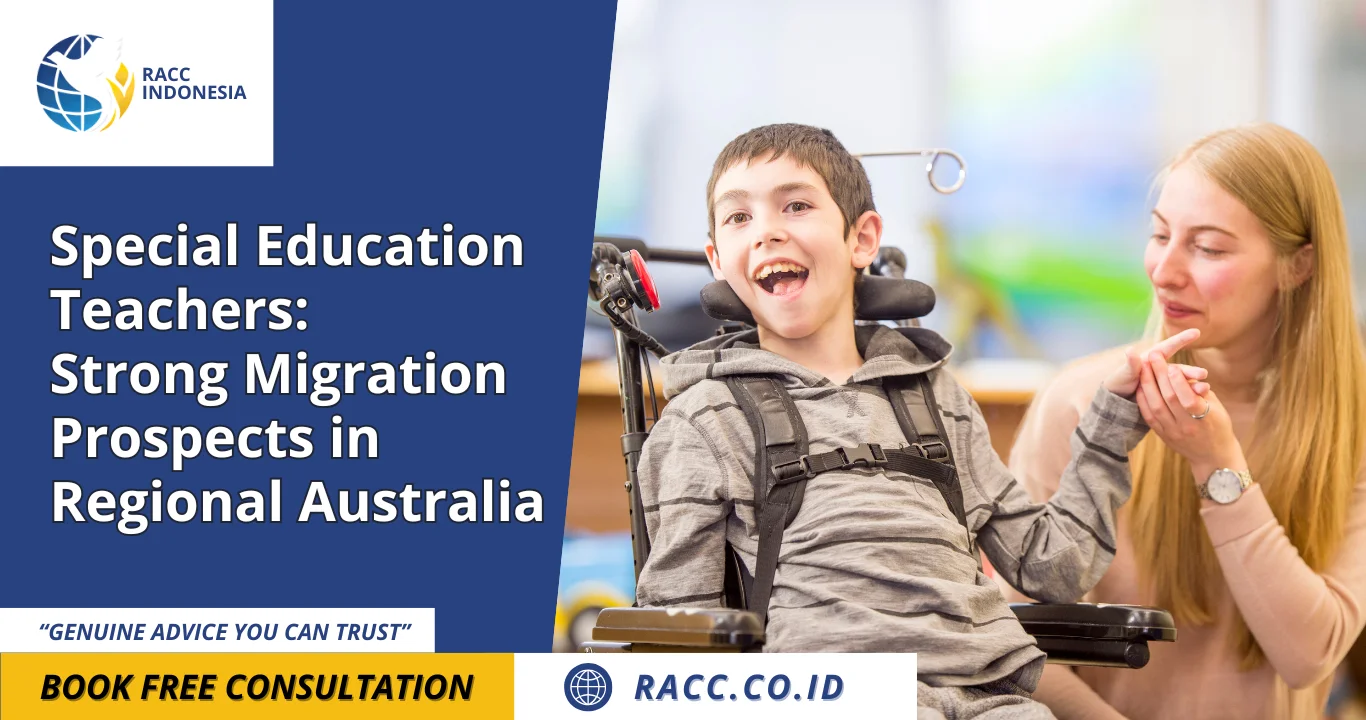
Special Education Teachers play a vital role in supporting students who have learning difficulties, physical disabilities, or behavioral and emotional challenges. Their work focuses on ensuring that every student receives a fair chance to succeed academically and socially, regardless of their individual circumstances.
In practice, these teachers design and implement Individual Learning Plans (ILPs) that cater to the specific needs of each student. They work closely with classroom teachers, psychologists, and parents to create a supportive and inclusive learning environment. The goal is not only to help students achieve academic progress but also to build confidence, independence, and essential life skills.
This profession requires strong communication, patience, and empathy, along with a deep understanding of educational psychology and teaching strategies. In Australia, Special Education Teachers are highly respected professionals who contribute directly to the country’s inclusive education mission.
For those who have a genuine passion for teaching and helping others, this career is both meaningful and rewarding, offering daily opportunities to make a difference in students’ lives.
High Demand and Shortage in Regional Australia
Australia is currently facing one of its most significant teacher shortages in decades, and the need for Special Education Teachers is among the highest across all education fields. According to Jobs and Skills Australia, there are around 29,900 people employed as Special Education Teachers nationwide, and this number is projected to grow by approximately 6.9% between 2023 and 2028.
This growth reflects not only the country’s increasing commitment to inclusive education but also a critical shortage of qualified professionals, particularly in regional and remote areas. A report by the Australian Education Union (AEU, 2024) found that over 80% of schools reported difficulties filling teaching positions, with the situation most severe outside major cities.
Regional Australia has become a priority destination for skilled education professionals due to this shortage. Many regional schools now offer employment sponsorships or support for visa nominations to attract qualified teachers. Educators who study or work in designated regional areas also benefit from additional migration points, lower living costs, and stronger chances for State or Territory nomination under the Skilled Migration Program.
In addition to workforce data, demographic trends indicate an ageing teaching population, with 17% of teachers aged 60 or older (AITSL, 2023). This means that demand for new teachers, especially those with special education expertise, will continue to increase over the next decade.
For international graduates and skilled educators from Indonesia, this presents a strong and realistic opportunity to build a stable career while contributing to Australia’s inclusive education system.
Related reading:
Australia Regional Migration Pathways
Subclass 491 Regional Provisional Visa as a PR Pathway
Study Pathways to Become a Special Education Teacher
Becoming a Special Education Teacher in Australia typically begins with completing a recognised education degree that qualifies you for teacher registration. International students from Indonesia can choose between undergraduate and postgraduate pathways, depending on their academic background and experience.
For those starting fresh, the Bachelor of Education (Special Education) or Bachelor of Special Education programs offer comprehensive training in inclusive teaching, learning assessment, and behaviour support strategies. These programs usually take four years to complete and include supervised teaching placements in schools.
For students who already hold a teaching or education-related qualification, a Master of Special Education (one to two years) is the preferred option. This pathway provides advanced expertise in working with students with disabilities and prepares graduates for both teaching and leadership roles in inclusive education settings.
Many universities in regional Australia offer these programs with additional incentives, including lower tuition fees, smaller class sizes, and strong industry connections. Recommended regional universities include:
- Charles Sturt University (New South Wales)
- University of Newcastle (New South Wales)
- University of Tasmania
- Deakin University (Regional Victoria)
Graduates of Australian education programs are eligible to apply for the Post-Study Work Visa (Subclass 485), which allows them to gain professional experience for two to four years depending on the qualification and study location. Those who study in regional areas receive an extra one to two years of post-study work rights, significantly enhancing their chances of securing employment and progressing toward Permanent Residency (PR).
Studying in a regional area also provides a more immersive community experience and an additional five migration points when applying through the skilled migration program, making it a practical and strategic choice for aspiring educators.
Related reading:
Study, Work, and PR in Australia: Step-by-Step Pathway
Australia Post-Study Work Visa (Subclass 485): A Pathway to Permanent Residency
Migration Pathways and Career Outlook
Special Education Teachers benefit from some of the strongest migration prospects within Australia’s education sector. The occupation is included in the Medium and Long-Term Strategic Skills List (MLTSSL), which means it is eligible for multiple skilled migration visas that can lead to Permanent Residency (PR).
Graduates and skilled professionals may consider several main visa pathways:
- Skilled Independent Visa (Subclass 189)
For individuals who meet the points requirement and want to apply for PR without the need for state nomination or employer sponsorship. - Skilled Nominated Visa (Subclass 190)
Requires nomination by a state or territory government. Many regions actively nominate teachers, especially those in the special education field, due to persistent shortages. - Skilled Work Regional (Provisional) Visa (Subclass 491)
Designed for skilled workers who live, work, or study in designated regional areas. This visa provides five years of residency and a clear transition to Permanent Residency after three years. - Employer Sponsored Pathway (Subclass 482 → 186)
Some regional schools or educational institutions may offer sponsorship to skilled teachers. After a qualifying period, employees may transition to the Employer Nomination Scheme (Subclass 186) for PR.
In terms of job prospects, Jobs and Skills Australia (2024) projects continuous growth in this occupation, with employment expected to rise by around 6.9% between 2023 and 2028. The average annual salary for Special Education Teachers ranges from AUD 70,000 to 110,000, depending on location, experience, and level of responsibility.
Teachers in regional Australia often report higher job satisfaction due to smaller class sizes, stronger school communities, and access to professional development programs. Combined with the strong PR pathways, this makes Special Education Teaching one of the most rewarding and stable long-term careers for international graduates in Australia.
Related reading:
The Easiest PR Pathways in Australia – 2025 Update
State Nomination Explained – The Benefits of Subclass 190 Visa Australia
How RACC Indonesia Can Help You Start This Pathway
Pursuing a career as a Special Education Teacher in Australia requires more than academic qualifications. It involves understanding complex visa systems, meeting English language requirements, and choosing the right study location that aligns with both career goals and migration potential. This is where RACC Indonesia plays an essential role.
RACC Indonesia provides free consultation and end-to-end guidance for students and professionals who want to study, work, and eventually migrate to Australia. The team assists clients in identifying suitable universities and courses, preparing documents for GS (Genuine Student) Statement requirements, securing Confirmation of Enrolment (CoE), and submitting student visa applications.
Beyond education placement, RACC also helps graduates navigate the next steps, such as applying for the Post-Study Work Visa (Subclass 485), understanding the Skilled Migration program. Every plan is tailored based on individual qualifications, career interests, and long-term residency goals.
RACC Indonesia has successfully assisted many Indonesian students and professionals to transition from studying in Australia to obtaining Permanent Residency through education pathways. The consultation process is transparent, practical, and designed to help clients make informed decisions without unnecessary costs.
If you are passionate about inclusive education and dream of building a long-term career in Australia, now is the right time to take the first step.
Contact RACC Indonesia today to discuss your study and migration options with our experienced education consultants.
Related reading:
Australia Skilled Migration vs Employer Sponsored PR – Which Is Better?