Forestry and Fisheries Professionals: PR Opportunities in Regional Australia
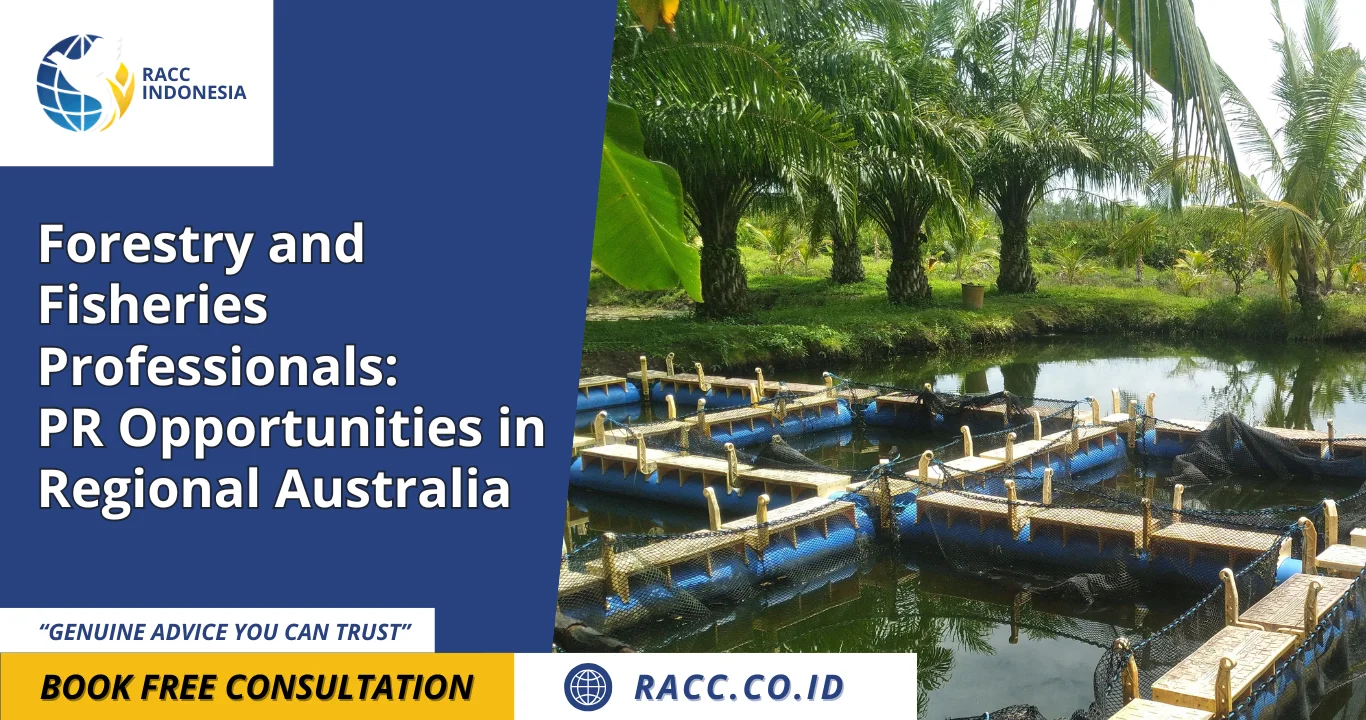
Why Forestry and Fisheries Roles Are Critical in Australia Forestry and fisheries play a strategic role in Australia’s regional economy, environmental management, and food security. From sustainable timber production and land rehabilitation to fisheries stock management and aquaculture, these industries underpin regional employment while supporting national sustainability and biosecurity goals. As a result, Australia continues to face skills shortages in professional forestry and fisheries roles, particularly outside major cities. Government policy increasingly prioritises regional development, sustainable resource management, and climate resilience. This has elevated demand for qualified Foresters and Fisheries Professionals who can manage natural resources responsibly, comply with environmental regulations, and support long-term industry viability. Many roles are located in regional and coastal areas where local talent pools are limited. Key drivers of demand include: Because of these factors, forestry and fisheries professions are closely aligned with regional migration pathways. While metropolitan opportunities are limited, regional Australia offers clear and realistic PR options through state nomination, regional skilled visas, and employer sponsorship. For overseas-qualified professionals with relevant science-based qualifications and applied field experience, forestry and fisheries roles offer not only stable careers but also strong migration potential, especially for those willing to live and work in regional Australia, where demand is most acute. Understanding the Occupations (ANZSCO Codes & Role Scope) Forestry and fisheries professionals are assessed under science-based ANZSCO occupations, with a strong emphasis on technical, analytical, and field-based responsibilities. As with many environmental and resource roles, migration eligibility depends on what you actually do, not your job title. Correct occupation selection is critical because it determines the assessing authority, skills assessment requirements, and access to regional PR pathways. Forester — ANZSCO 234113 Foresters are responsible for the management, conservation, and sustainable use of forest resources. Core responsibilities typically include: Foresters commonly work in: From a migration perspective, ANZSCO 234113 is strongly aligned with regional employment, making it well-suited to state nomination and regional visas. Fisheries Scientist — ANZSCO 234113 / Related Science Classifications Fisheries Scientists focus on the management and sustainability of marine and freshwater resources. Typical responsibilities include: These roles are often based in: Fisheries roles with a strong scientific and analytical focus have the highest migration success rates. Aquaculture and Operational Fisheries Roles (Migration Limitations) Not all fisheries-related roles qualify for skilled migration. Roles that are often limited or high-risk for PR include: These positions are typically classified as lower-skill or operational roles and rely more on employer sponsorship than skilled migration pathways. Which Forestry and Fisheries Roles Have the Strongest PR Potential From a migration standpoint: Applicants must ensure their qualifications and job duties clearly align with professional resource management roles to achieve successful PR outcomes. Skills Assessment Requirements (VETASSESS) For Forestry and Fisheries Professionals pursuing skilled migration or regional PR pathways, a positive skills assessment from VETASSESS is mandatory. VETASSESS assesses whether your qualifications and professional experience meet Australian standards and whether your duties align with the nominated ANZSCO occupation. This stage is decisive. Many applicants are refused due to roles that are too operational, insufficiently scientific, or poorly documented. Assessing Authority: VETASSESS VETASSESS evaluates applications based on: Job titles alone are not accepted. The assessment focuses on actual tasks performed and decision-making scope. Qualification Requirements Applicants are generally expected to hold at least a Bachelor’s degree in a closely related field, such as: Degrees that are heavily operational, certificate-based, or unrelated to science and resource management typically do not meet skilled migration standards. Work Experience Requirements VETASSESS places strong emphasis on post-qualification professional experience. Relevant experience usually includes: Purely manual, operational, or labour-based roles are unlikely to qualify. Evidence Required Applicants must provide clear and detailed documentation, including: Well-structured references that explain how decisions are made and applied significantly improve approval rates. English Language Requirements For skilled migration purposes, applicants must meet at least: Higher English scores improve competitiveness for points-tested regional visas. Why VETASSESS Is Strict for Resource Management Roles Forestry and fisheries occupations are considered professional science roles with regulatory and environmental implications. Australia prioritises applicants who can contribute immediately to sustainable resource management and compliance outcomes. Applicants who cannot demonstrate scientific reasoning, technical assessment, and professional responsibility face a high risk of refusal. Migration & PR Pathways (Regional-Focused) For Forestry and Fisheries Professionals, regional migration pathways are not just an option, they are the core strategy. Most roles in this sector are naturally based outside capital cities, and Australia’s migration system is deliberately designed to channel these professionals into regional areas where skills shortages are most acute. Subclass 189 – Skilled Independent Visa (PR) (When Available) The Subclass 189 visa may be available only when the nominated occupation appears on the MLTSSL in a specific program year. Key realities: For forestry and fisheries professionals, 189 should be treated as a secondary opportunity, not the primary migration plan. Subclass 190 – Skilled Nominated Visa (PR) The Subclass 190 visa is a realistic PR pathway for professional forestry and fisheries roles. Why 190 works well: States with strong nomination potential typically include those with large regional land and marine assets, conservation programs, and agricultural industries. Subclass 491 – Skilled Work Regional Visa (Provisional → PR) Primary PR Pathway for This Sector The Subclass 491 visa is the most reliable and accessible pathway for forestry and fisheries professionals. Key advantages: Because most forestry and fisheries roles are already regional, applicants often meet location requirements naturally. Employer-Sponsored Pathways Employer sponsorship is common in forestry, aquaculture, and government-linked resource management roles. Key options include: Regional employers are often more willing to sponsor due to persistent skills shortages and retention challenges. Why Regional Pathways Are Strongest for This Sector Compared to metropolitan-based professions: For forestry and fisheries professionals, a regional-first migration strategy is not a compromise; it is the optimal path to PR. Job Market & Career Outlook in Australia The job market for Forestry and Fisheries Professionals in Australia is closely tied to regional development, sustainability policy, and natural resource management. Unlike metropolitan-based professions, demand in this sector is geographically concentrated in regional,
Engineering Technicians and Draftspersons: Alternative PR Routes for Technical Professionals

Why Engineering Technicians and Draftspersons Matter in Australia Australia’s major infrastructure, construction, and industrial projects rely heavily on engineering technicians and draftspersons to translate engineering concepts into buildable, functional outcomes. While engineers often design systems at a conceptual level, technicians and draftspersons play a critical role in implementation, documentation, and on-site technical support, areas where Australia continues to experience skills shortages. As governments and private developers invest in transport infrastructure, housing, renewable energy, and resource projects, demand has grown for professionals who can produce technical drawings, support construction teams, conduct testing, and ensure designs are executed accurately. These roles are especially vital in regional and project-based environments, where practical technical skills are in short supply. Several factors are driving sustained demand: Because of these factors, engineering technicians and draftspersons have emerged as viable “alternative PR routes” for technical professionals who may not qualify under traditional engineering pathways. Many of these occupations appear on skilled and regional occupation lists and are actively targeted by state governments and regional employers. For overseas-qualified professionals with diploma or advanced diploma-level qualifications and strong hands-on experience, these roles offer realistic employment opportunities and clear migration potential, particularly through state nomination, regional visas, and employer-sponsored pathways. Understanding the Occupations (ANZSCO Codes & Role Scope) Engineering Technicians and Draftspersons are classified as technical occupations under Australia’s ANZSCO system. While they work closely with engineers, these roles are assessed separately for migration purposes and have different qualifications, skills assessment, and PR pathway considerations. Correctly identifying the appropriate ANZSCO code is essential, as it determines the assessing authority and visa eligibility. Engineering Technicians — ANZSCO 312311–312999 Engineering Technicians provide technical and practical support to engineering teams, often bridging the gap between design and on-site execution. Common technician occupations include: Typical responsibilities: These roles are common in construction projects, manufacturing facilities, mining operations, and engineering consultancies. Draftspersons — ANZSCO 312211–312216 Draftspersons specialise in producing detailed technical drawings and plans that guide construction, manufacturing, and installation. Key draftsperson occupations include: Core responsibilities: These roles are critical in ensuring projects are executed accurately and efficiently. Technicians vs Draftspersons vs Engineers From a migration and employment perspective: This distinction affects: Which Roles Have the Strongest PR Potential Generally: Correct classification and task alignment are critical to a successful migration outcome. Skills Assessment Requirements (TRA / VETASSESS) For Engineering Technicians and Draftspersons, a positive skills assessment is mandatory before applying for skilled migration or most employer-sponsored visas. The assessing authority and assessment criteria depend on the exact ANZSCO occupation and whether the role is considered trade-based or non-trade technical. This stage is where many applicants succeed or fail; incorrect assessor selection or weak evidence is a common issue. Assessing Authorities Explained Trades Recognition Australia (TRA)TRA typically assesses trade-aligned technical roles, especially where practical, hands-on competencies are central. Commonly TRA-assessed occupations include: VETASSESSVETASSESS usually assesses non-trade technical occupations, including many drafting roles. Commonly VETASSESS-assessed occupations include: Choosing the wrong assessing authority can result in an automatic refusal. Qualification Requirements Most technician and draftsperson occupations require: Relevant fields include: Degree-level qualifications are not mandatory and do not necessarily provide an advantage for these occupations. Work Experience Requirements Assessing authorities focus on post-qualification experience that matches the nominated occupation. Typical expectations include: Work experience must clearly show independent technical responsibility, not trainee or assistant-level duties. Evidence Required Applicants are usually required to provide: Generic references that list tools but not responsibilities are a common reason for refusal. English Language Requirements For skilled migration purposes, applicants must meet at least: Higher English scores improve competitiveness for points-tested visas. Why Skills Assessment Is Critical for Technical Roles Engineering Technicians and Draftspersons are assessed on practical competence, not academic theory. Assessing authorities want evidence that applicants can contribute immediately to Australian projects. A strong skills assessment confirms that the applicant is job-ready and eligible to proceed to PR pathway planning. Migration & PR Pathways (Alternative Routes Explained) Engineering Technicians and Draftspersons often follow different and more flexible PR routes compared to degree-qualified engineers. While traditional engineering roles are highly competitive under points-tested migration, technical occupations benefit from state nomination, regional demand, and employer sponsorship, making them realistic alternatives for long-term migration. Subclass 189 – Skilled Independent Visa (PR) (When Available) Eligibility for Subclass 189 depends on whether the specific technician or draftsperson occupation appears on the MLTSSL in a given program year. Key considerations: For most technical professionals, 189 should be treated as an opportunistic option, not the primary strategy. Subclass 190 – Skilled Nominated Visa (PR) The Subclass 190 visa is one of the strongest PR pathways for technicians and draftspersons. Why 190 works well for these roles: Civil, mechanical, electrical, and drafting roles linked to construction and infrastructure are frequently prioritised by state governments. Subclass 491 – Skilled Work Regional Visa (Provisional → PR) The Subclass 491 visa is often the most achievable pathway for technical professionals. Advantages: Regional employers value practical, job-ready skills, making technicians and draftspersons ideal candidates. Employer-Sponsored Pathways Employer sponsorship is common for technical roles, especially where skills are project-specific. Key options include: These pathways suit applicants with solid experience but lower PR points. Why These Roles Are “Alternative PR Routes” Compared to engineers: For many applicants, technician and draftsperson pathways provide a more practical and achievable route to Permanent Residency. Job Market & Career Outlook in Australia Engineering Technicians and Draftspersons are in steady demand across Australia due to ongoing investment in infrastructure, housing, energy, and industrial projects. Unlike purely design-focused roles, these technical occupations are closely tied to project delivery, making them less vulnerable to outsourcing and economic fluctuations. Industries Hiring Technicians and Draftspersons Demand is strongest in sectors where practical technical skills are essential: Construction & Infrastructure Mining & Resources Manufacturing & Industrial Services Engineering & Design Consultancies These industries employ technicians and draftspersons in both metropolitan and regional locations. Salary Expectations Salaries vary by experience, discipline, and location: Regional roles often offer additional benefits such as site allowances, overtime, or accommodation support. Regional vs Metropolitan Demand Regional Australia: Metropolitan
Environmental Scientists and Consultants: Green Careers with PR Potential

Why Environmental Careers Are in Demand in Australia Australia’s economy is undergoing a structural shift toward sustainability, climate resilience, and environmental accountability. As governments and industries respond to climate change, biodiversity protection, and stricter environmental regulations, demand has grown rapidly for Environmental Scientists and Environmental Consultants with strong technical and scientific expertise. Environmental professionals are now essential across major sectors such as mining, construction, energy, agriculture, and infrastructure. Large projects require environmental impact assessments, contamination studies, compliance reporting, and ongoing monitoring to meet both state and federal regulations. This has transformed environmental science from an academic field into a core operational requirement for Australian businesses. Several factors are driving sustained demand: Because of these trends, Environmental Scientist (ANZSCO 234312) has gained increasing relevance within Australia’s skilled migration framework. When correctly assessed and aligned with scientific duties, this occupation can offer realistic PR pathways, particularly through skilled migration and state nomination programs. For overseas-qualified professionals with applied environmental science experience, such as fieldwork, impact assessment, and technical reporting, Australia offers long-term career opportunities and genuine migration potential, especially for those willing to work in regional areas where environmental expertise is in high demand. Understanding the Occupations (ANZSCO Codes & Role Scope) In Australia’s skilled migration system, environmental roles are assessed based on scientific and technical scope, not job titles. Many positions labelled “environmental consultant” or “sustainability officer” only qualify for migration if their duties align with recognised science-based ANZSCO occupations. Correct classification is critical; misalignment between job duties and ANZSCO scope is one of the most common reasons for skills assessment refusal. Environmental Scientist — ANZSCO 234312 Environmental Scientist is the primary and most reliable migration occupation for environmental professionals. Core responsibilities include: These roles are common in: From a migration perspective, ANZSCO 234312 is regularly recognised on skilled occupation lists, making it suitable for PR pathways when supported by a positive skills assessment. Environmental Consultant — Role Classification Explained “Environmental Consultant” is a job title, not a standalone ANZSCO occupation. In most migration cases, environmental consultants are assessed under: To qualify, the role must involve: Purely advisory, administrative, or policy-based consulting roles generally do not meet migration criteria. Related Roles and Common Misclassifications Some roles appear related but often fail skills assessment if misclassified, such as: These positions focus on governance or communication rather than scientific assessment and are therefore high-risk for skilled migration. Which Environmental Roles Have the Strongest PR Potential From a migration standpoint: Applicants must ensure their actual job duties, not just job titles, clearly match the Environmental Scientist ANZSCO description. Skills Assessment Requirements (VETASSESS) For Environmental Scientists and Consultants applying for skilled migration, a positive skills assessment from VETASSESS is mandatory. VETASSESS assesses whether your qualifications and work experience meet Australian standards and whether your professional duties align with ANZSCO 234312 (Environmental Scientist). This stage is critical; many environmental applicants fail due to insufficient scientific content in their qualifications or roles that are too policy- or compliance-focused. Assessing Authority: VETASSESS VETASSESS evaluates applicants based on: Job titles alone are not decisive. The focus is on what you actually do. Qualification Requirements Applicants are typically required to hold a Bachelor’s degree or higher in a closely related field, such as: Degrees that are heavily policy-based or managerial may not be sufficient without substantial technical experience. Work Experience Requirements VETASSESS assesses whether your experience demonstrates professional-level environmental science practice. Relevant experience typically includes: Experience focused solely on compliance administration, auditing checklists, or stakeholder engagement is often rejected. Evidence Required Applicants must provide: Strong, task-specific references significantly improve assessment outcomes. English Language Requirements For skilled migration purposes, applicants must meet: Higher English scores improve competitiveness for points-tested PR pathways. Why VETASSESS Is Strict for Environmental Roles An environmental scientist is classified as a professional science occupation. Australia prioritises applicants who can contribute immediately to regulated projects and environmental approvals. Applicants who cannot demonstrate hands-on scientific capability face a high risk. Migration & PR Pathways for Environmental Scientists and Consultants After securing a positive VETASSESS skills assessment, Environmental Scientists can access several skilled migration and PR pathways. The strength of each option depends on PR points, state demand, and whether the role is tied to regional or project-based work. Subclass 189 – Skilled Independent Visa (PR) When an Environmental Scientist (ANZSCO 234312) appears on the MLTSSL for the relevant program year, applicants may be eligible for Subclass 189. Key characteristics: This pathway suits applicants with strong English scores, relevant experience, and competitive points. Invitations are limited, so applicants should treat 189 as a high-reward but uncertain option. Subclass 190 – Skilled Nominated Visa (PR) The Subclass 190 visa is often the most realistic PR pathway for environmental professionals. Why 190 works well for this occupation: States frequently nominate environmental scientists to support environmental approvals, rehabilitation, and compliance activities linked to major developments. Subclass 491 – Skilled Work Regional Visa (Provisional → PR) Regional Australia has strong and ongoing demand for environmental expertise. Key advantages: For many applicants, 491 provides the fastest and most achievable route to PR. Employer-Sponsored Pathways Environmental professionals are commonly sponsored by consulting firms, resource companies, and infrastructure contractors. Available options include: Employer sponsorship is particularly effective for applicants with niche environmental skills or project-based experience. Practical Strategy Considerations A multi-pathway strategy is often essential to secure Permanent Residency. Job Market & Career Outlook in Australia Australia’s transition toward sustainable development, renewable energy, and stricter environmental regulation has created sustained demand for Environmental Scientists and Environmental Consultants with strong technical capabilities. Unlike cyclical industries, environmental roles are closely tied to long-term infrastructure planning and regulatory frameworks, providing relative career stability. Industries Hiring Environmental Professionals Environmental expertise is required across a wide range of sectors: Mining & Resources Construction & Infrastructure Energy & Renewables Government & Regulatory Bodies Environmental Consulting Firms These sectors provide employment opportunities in both metropolitan and regional Australia. Salary Expectations Salaries vary depending on experience, sector, and location: Regional roles may include project allowances, travel benefits, or accelerated career progression. Regional vs Metropolitan
Finance and Banking Professionals: Migration Insights for Skilled Workers

Demand for Finance and Banking Professionals in Australia Australia has a well-established and highly regulated financial services sector, encompassing commercial banking, accounting firms, corporate finance, insurance, and an expanding fintech industry. As businesses grow more complex and regulatory oversight increases, demand remains steady for skilled finance and banking professionals who can manage compliance, financial reporting, risk, and strategic decision-making. While finance roles are not experiencing the same volume shortages as healthcare or trades, specific occupations, particularly in accounting and compliance, continue to be relevant for skilled migration. Australia’s taxation system, corporate governance requirements, and financial reporting standards create ongoing demand for professionals with strong technical finance expertise and recognised qualifications. Key factors driving demand include: It is important to note that not all banking roles are suitable for skilled migration. Positions such as bank tellers, relationship officers, or general customer service roles do not meet skilled occupation criteria. In contrast, accounting-related occupations, such as Accountants and Auditors, remain the most reliable migration pathways within the finance sector. For overseas professionals with the right qualifications and experience, finance and banking can still offer viable PR pathways, provided the occupation is correctly classified, and the migration strategy is realistic and well-planned. Understanding the Occupations (ANZSCO Codes & Role Scope) In Australia’s skilled migration system, finance and banking professionals are assessed strictly by occupation scope, not job title. Many roles commonly described as “banking” do not qualify for skilled migration, while accounting and audit occupations form the core PR-eligible pathways within this sector. Correct ANZSCO selection is critical. Misclassification is one of the most common reasons finance applicants fail skills assessment or visa applications. Accountant (General) — ANZSCO 221111 This is the most common and strongest finance-related migration occupation. Core responsibilities: Migration relevance: 2.2 Management Accountant — ANZSCO 221112 Management Accountants focus on internal financial management and strategic decision-making. Typical duties: Migration relevance: External Auditor — ANZSCO 221213 External Auditors work in assurance, risk, and regulatory compliance roles. Key responsibilities: Migration relevance: Finance & Banking Roles with Limited Migration Options Many roles within banks and financial institutions do not qualify for skilled migration, including: These positions lack the specialised skill level required under ANZSCO for migration purposes. Which Finance Roles Have the Strongest PR Potential From a migration perspective: Applicants must ensure their actual job duties, qualifications, and experience clearly align with the nominated ANZSCO code before proceeding. Skills Assessment Requirements (CPA Australia / CA ANZ / IPA) For finance and banking professionals pursuing skilled migration, a positive skills assessment is mandatory for points-tested visas. For accounting and audit occupations, assessments are conducted by one of Australia’s recognised accounting bodies: CPA Australia, Chartered Accountants Australia and New Zealand (CA ANZ), or the Institute of Public Accountants (IPA). The assessment focuses on whether your qualifications meet Australian accounting standards, not just your job title. Assessing Authorities for Finance Professionals Applicants may choose one of the following assessing bodies (depending on eligibility): All three are accepted by the Department of Home Affairs for skilled migration purposes. Qualification Requirements Your academic background must cover core accounting knowledge areas, typically including: If your degree lacks one or more required subjects, you may need to complete bridging units or further study before obtaining a positive assessment. Work Experience Requirements For skills assessment purposes: Experience must be highly relevant to the nominated occupation (e.g. accounting, audit, compliance). English Language Requirements Accounting assessments typically require higher English standards than many other occupations. Common requirements include: These higher scores also significantly improve PR points. Evidence Required Applicants are usually required to submit: Accuracy and completeness are essential; missing subjects or unclear transcripts are a frequent cause of delays or negative outcomes. Why Skills Assessment Is Critical A positive skills assessment confirms that your education meets Australian professional standards and allows you to: Without a positive assessment, skilled migration applications cannot proceed. Migration & PR Pathways for Finance and Banking Professionals Once a positive skills assessment is obtained, eligible finance professionals, particularly those in accounting and audit occupations, can access several skilled migration and PR pathways. The viability of each option depends on the nominated ANZSCO code, PR points score, and whether state nomination or employer sponsorship is available. Subclass 189 – Skilled Independent Visa (PR) The Subclass 189 visa is available to points-tested applicants whose occupation appears on the MLTSSL in the relevant program year. For finance professionals, this generally applies to: Key features: Applicants usually require high English scores, strong qualifications, and competitive points to receive an invitation. Subclass 190 – Skilled Nominated Visa (PR) The Subclass 190 visa is one of the most realistic PR options for finance professionals. Advantages: State governments nominate accountants and auditors to support local businesses, public sector agencies, and regional economies. Nomination criteria vary by state and may include employment location, work experience, or occupation-specific demand. Subclass 491 – Skilled Work Regional Visa (Provisional → PR) The Subclass 491 visa is increasingly popular for finance professionals willing to work in regional Australia. Key benefits: Regional areas require accountants for SMEs, councils, healthcare providers, and education institutions, making this pathway more accessible than metro-based options. Employer-Sponsored Pathways Finance professionals may also access PR through employer sponsorship, particularly when working in specialised roles. Common options include: Employer sponsorship is often more realistic for applicants with moderate PR points. PR Limitations for Banking Roles Many roles within banks, such as branch operations, relationship management, or customer service, do not qualify for skilled migration. These roles typically: Applicants in banking should carefully assess whether their role genuinely aligns with an eligible finance occupation. Job Market & Career Outlook in Australia Australia’s finance and banking sector remains stable and highly regulated, creating consistent demand for qualified accounting and finance professionals rather than volume-based hiring. Employers prioritise technical competence, compliance knowledge, and familiarity with Australian financial standards, which directly shape migration outcomes for skilled workers. Key Employment Sectors Accounting & Professional Services Firms Corporate & Commercial Organisations Banking & Financial Institutions Government & Public Sector Fintech & Financial Technology
Veterinarians and Animal Care Professionals: Migration Options and Career Outlook

Demand for Veterinary and Animal Care Professionals in Australia Australia has one of the strongest animal health and welfare sectors in the world, supported by large-scale livestock and agricultural industries, high rates of pet ownership, and strict biosecurity and animal welfare regulations. As a result, the country continues to face persistent shortages of qualified Veterinarians and Animal Care Professionals, particularly outside major metropolitan areas. Veterinary services are critical not only for companion animals, but also for food security, export standards, disease control, and public health. At the same time, animal care professionals play a vital support role in clinics, shelters, farms, and research facilities, ensuring animal welfare standards are maintained and that veterinary services can operate efficiently. Several factors are driving ongoing demand: Because of these structural shortages, Veterinarian (ANZSCO 234711) and certain Animal Care occupations (e.g., ANZSCO 361311) are recognised within Australia’s skilled migration framework and can be eligible for points-tested Permanent Residency pathways, including Subclass 189, when program-year criteria are met. For overseas-qualified professionals with the right qualifications, skills assessment outcomes, and English proficiency, these occupations offer realistic long-term career opportunities and clear migration potential, especially for those willing to work in regional areas where demand is most acute. Understanding the Occupations (ANZSCO Codes & Role Scope) Although Veterinarians and Animal Care Professionals often work side by side, Australia’s migration system treats these occupations very differently. Correct ANZSCO classification is critical, as it determines the assessing authority, skills assessment requirements, and eligibility for PR pathways such as Subclass 189. Veterinarian — ANZSCO 234711 A veterinarian is a professional with full clinical responsibility for animal health and welfare. Core Responsibilities: Veterinarians may work in: From a migration perspective, ANZSCO 234711 is on the MLTSSL, making it one of the strongest health-related occupations for PR, including Subclass 189. Animal Care Professionals — ANZSCO 361311 (Animal Attendant) Animal Care Professionals provide hands-on care and support services for animals, usually under veterinary supervision. Typical Responsibilities: These roles are common in: While the scope is more limited than that of a veterinarian, ANZSCO 361311 can be eligible for points-tested migration, including Subclass 189, when it appears on the skilled occupation lists for a given program year. Key Differences That Matter for Migration From a migration standpoint, the differences between the two roles are significant: Applicants must ensure their actual job duties, not just their job title, match the chosen ANZSCO code. Misclassification is a common reason for skills assessment refusal. Which Roles Have the Strongest PR Potential In general: Choosing the correct occupation and pathway at the start is essential to building a successful migration strategy. Skills Assessment & Registration Requirements For both Veterinarians and Animal Care Professionals, skills assessment is the foundation of any skilled migration or PR application. However, the assessing authorities, standards, and complexity differ significantly between the two occupations. Understanding these requirements early is critical to avoid delays or refusals. Veterinarians — AVBC Skills Assessment Veterinarians must undergo assessment through the Australian Veterinary Boards Council (AVBC). This is a mandatory requirement for skilled migration and professional practice in Australia. Key components of the AVBC process include: Depending on where the qualification was obtained, applicants may be required to complete: A successful AVBC outcome is required before applying for PR visas such as Subclass 189, 190, or 491. Registration with State Veterinary Boards In addition to AVBC assessment, veterinarians must register with the state or territory veterinary board where they intend to practise. Registration requirements typically include: Without state registration, a veterinarian cannot legally work in Australia—even if a visa is granted. Animal Care Professionals — Skills Assessment Pathways Animal Care Professionals (ANZSCO 361311) usually require a skills assessment through VETASSESS. Typical requirements include: The assessment focuses heavily on practical duties, not job titles. Roles that are purely cleaning, kennel maintenance, or casual support may not meet the skilled threshold. English Language Requirements English requirements differ by occupation: Meeting the minimum English requirements does not guarantee competitiveness for PR, especially for Subclass 189. Why Skills Assessment Is a Critical Filter Skills assessment authorities apply strict criteria to ensure migrants meet Australian professional standards. Common reasons for refusal include: A successful assessment confirms that the applicant is job-ready in the Australian context and eligible to proceed with migration pathways. Migration & PR Pathways for Veterinarians and Animal Care Professionals Once a positive skills assessment is secured, Veterinarians and eligible Animal Care Professionals can access several skilled migration and PR pathways. The strength and predictability of each pathway vary by occupation, points score, and willingness to work in regional areas. Subclass 189 – Skilled Independent Visa (PR) Subclass 189 is available to points-tested applicants when their occupation is on the MLTSSL for the relevant program year. This pathway offers the highest flexibility but requires a strong points score. Subclass 190 – Skilled Nominated Visa (PR) State governments regularly nominate veterinary occupations to address shortages, particularly outside capital cities. Key features Subclass 190: States with strong demand include NSW, QLD, VIC, WA, SA, and TAS, especially for rural veterinary services and regional clinics. Subclass 491 – Skilled Work Regional Visa (Provisional → PR) The 491 is a highly practical pathway due to severe regional shortages. Advantages: This pathway is particularly effective for veterinarians willing to work in rural or regional practices. Employer-Sponsored Pathways Employer sponsorship is common in veterinary services due to chronic understaffing. Available options include: Employer sponsorship is often the fastest route to stable employment and PR, especially for animal care roles. Practical Strategy Considerations Choosing the right pathway early avoids wasted applications and maximises PR outcomes. Job Market & Career Outlook in Australia Australia’s animal health and welfare sector continues to experience long-term workforce shortages, making Veterinarians and eligible Animal Care Professionals critical to both public and private services. Demand is not cyclical; it is structural, driven by agriculture, biosecurity requirements, and rising companion animal ownership. Where the Jobs Are Companion Animal Practices Livestock & Rural Veterinary Services Government, Biosecurity & Research Animal Care & Welfare Organisations These sectors
Human Resource Managers: Career Demand and PR Pathways in Australia

Why Human Resource Managers Are in Demand in Australia Human Resource Managers play a critical role in Australia’s workforce as organisations face increasingly complex employment regulations, skills shortages, and changing workplace expectations. As businesses expand and diversify, there is a growing need for senior-level HR professionals who can manage compliance, workforce planning, and organisational strategy, not just day-to-day HR administration. Australia’s labour market is highly regulated, with strict requirements under the Fair Work Act, modern awards, workplace health and safety obligations, and anti-discrimination laws. Employers, therefore, seek experienced Human Resource Managers who can ensure compliance while supporting productivity, employee engagement, and long-term workforce sustainability. Demand for HR Managers is driven by several key factors: Because of these needs, Human Resource Manager (ANZSCO 132311) remains a relevant occupation for skilled migration, particularly through state nomination and employer-sponsored pathways. While this occupation is not eligible for Subclass 189, experienced HR Managers with genuine managerial authority continue to be sought after by Australian employers, especially in sectors with large or distributed workforces. For overseas professionals with senior HR management experience, this occupation offers solid career opportunities and realistic PR pathways when supported by the right migration strategy and employer alignment. Understanding the Occupation (ANZSCO 132311 – Human Resource Manager) In Australia’s skilled migration framework, Human Resource Manager (ANZSCO 132311) is a senior management occupation. It is strictly assessed at a strategic and decision-making level. Applicants whose roles are operational or advisory in nature—such as HR Officers, HR Executives, or HR Advisors—do not meet the criteria for this occupation. Understanding this distinction is essential, as it directly affects skills assessment and visa eligibility. Core Responsibilities (Managerial-Level Only) A Human Resource Manager is responsible for shaping and leading an organisation’s people strategy, rather than executing routine HR tasks. Key responsibilities typically include: VETASSESS expects clear evidence that the applicant makes strategic decisions, not just supports them. What Does Not Qualify Under 132311 The following roles are commonly misclassified and will usually be rejected under this ANZSCO code: If the role focuses on implementation rather than decision-making, it is unlikely to qualify as a Human Resource Manager. Typical Work Environments Human Resource Managers are most commonly employed in organisations with large or complex workforces, such as: Smaller businesses may use the title “HR Manager,” but unless the role has genuine strategic authority, it may not meet migration criteria. Key Skills and Competencies Successful Human Resource Managers typically demonstrate: These competencies form the basis for skills assessment under VETASSESS and determine whether an applicant genuinely qualifies under ANZSCO 132311. Skills Assessment Requirements (VETASSESS) For Human Resource Managers applying for skilled migration or employer-sponsored PR, a positive skills assessment from VETASSESS is mandatory. VETASSESS applies a strict interpretation of ANZSCO 132311, focusing heavily on seniority, decision-making authority, and strategic responsibility. This is one of the most commonly refused management occupations when applicants misunderstand the required level. Assessing Authority: VETASSESS VETASSESS assesses whether: Job titles are not decisive. Evidence of authority and scope is critical. Qualification Requirements Applicants must hold a qualification equivalent to at least a Bachelor’s degree in a relevant field, such as: A Master’s degree strengthens the application but does not compensate for lack of senior experience. Work Experience Requirements VETASSESS expects: Experience as an HR Officer or Advisor, even for many years, usually does not qualify. Evidence Required Strong documentary evidence is essential and typically includes: Weak or generic references are a common reason for refusal. English Language Requirements For visa purposes, applicants must meet: Higher scores improve points for state nomination pathways. Why VETASSESS Is Strict for HR Managers Human Resource Manager is considered a high-level management role, not a technical skill occupation. Australia restricts this category to ensure migrants fill genuine leadership gaps rather than general HR support roles. As a result, applicants must demonstrate strategic impact, not operational HR functions. PR Pathways for Human Resource Managers (No Subclass 189 Option) Human Resource Managers (ANZSCO 132311) do not have access to the Skilled Independent Visa (Subclass 189). This occupation is not on the MLTSSL, meaning PR pathways are more limited and require either state nomination or employer sponsorship. Understanding this reality early is critical to avoid wasted time and incorrect applications. Subclass 190 – Skilled Nominated Visa (Primary Skilled Pathway) The Subclass 190 visa is the main points-tested PR option available for Human Resource Managers. Key characteristics: States may nominate HR Managers when there is demonstrated demand, typically in sectors with large or complex workforces. Common state focus areas: Applicants usually need strong senior experience and high English scores to be competitive. Subclass 491 – Skilled Work Regional Visa (Provisional → PR) The Subclass 491 visa is often a more realistic option for HR Managers compared to 190. Why 491 is strategic: Regional areas with large employers—such as hospitals, universities, mining operations, and regional councils—may support HR management roles. Employer-Sponsored Pathways (Most Practical for HR Managers) In practice, employer sponsorship is often the strongest and most reliable PR pathway for Human Resource Managers. Subclass 482 – Skills In Demand Visa Subclass 186 – Employer Nomination Scheme (PR) Subclass 494 – Regional Employer Sponsored (Provisional → PR) Employer-sponsored visas are particularly common for HR Managers because employers value local compliance knowledge and organisational fit. Why HR Managers Are Excluded from Subclass 189 The exclusion of HR Managers from Subclass 189 is intentional: As a result, HR Managers must rely on targeted nomination or sponsorship, not independent migration. Strategic Reality for HR Applicants For HR Managers, success depends on: Without a clear strategy, HR applicants face a higher risk than technical occupations. Job Market & Career Outlook in Australia The job market for Human Resource Managers in Australia remains stable and selective. Demand is not volume-based like technical or trade roles; instead, it is driven by organisational scale, regulatory exposure, and workforce complexity. Employers hire HR Managers when the role has clear strategic value, particularly in industries with large, regulated, or geographically dispersed workforces. Industries with Strong Demand for HR Managers Human Resource Managers
Network and Systems Administrators: Skilled Migration Pathway Explained

Why Australia Needs Network and Systems Administrators Australia’s economy is increasingly dependent on stable, secure, and high-performing digital infrastructure. As businesses migrate to cloud platforms, strengthen cybersecurity frameworks, and expand remote and hybrid work environments, the demand for skilled Network Administrators and Systems Administrators continues to rise across all industries. Organisations rely on these professionals to ensure that critical IT systems remain operational, secure, and scalable. From government agencies and financial institutions to healthcare providers and education sectors, network and systems administrators play a foundational role in maintaining day-to-day operations and protecting digital assets. Several factors are driving the sustained demand for these occupations: Because of these ongoing skill gaps, ICT Systems Administrator (ANZSCO 262113) and Network Administrator (ANZSCO 263112) are frequently included on Australia’s skilled occupation lists. This creates clear and realistic migration opportunities through skilled visas and employer-sponsored pathways. Professionals in these roles benefit from: For overseas-trained professionals and international graduates with hands-on infrastructure experience, network and systems administration offers a practical pathway to employment and Permanent Residency in Australia, supported by long-term digital investment and consistent workforce demand. Understanding the Occupations (ANZSCO Codes & Job Roles) Network and Systems Administrators are responsible for the design, operation, and maintenance of an organisation’s IT infrastructure. While these roles often overlap in real-world workplaces, Australia’s skilled migration framework distinguishes them using specific ANZSCO codes, each with defined responsibilities and assessment criteria. Understanding how your role aligns with these ANZSCO occupations is critical for skills assessment and visa eligibility. ICT Systems Administrator — ANZSCO 262113 ICT Systems Administrators focus on managing servers, operating systems, and core IT services that support business operations. Key Responsibilities: Typical Work Environments: Network Administrator — ANZSCO 263112 Network Administrators are responsible for maintaining secure and reliable network connectivity across organisations. Key Responsibilities: Typical Work Environments: Overlapping and Related Roles In practice, many professionals perform hybrid roles combining system and network responsibilities. Related job titles may include: As long as the majority of tasks align with one of the ANZSCO descriptions, these roles can still qualify for migration purposes. Key Technical Skills Required Successful Network and Systems Administrators typically demonstrate: These technical competencies form the basis for ACS skills assessment and determine migration eligibility. Skills Assessment Requirements (Australian Computer Society – ACS) For Network Administrators and Systems Administrators applying for skilled migration, a positive skills assessment from the Australian Computer Society (ACS) is mandatory. ACS assesses whether your qualifications and work experience meet Australian standards for ICT professionals and whether your job duties align with the nominated ANZSCO occupation. Without a positive ACS outcome, applicants cannot proceed with skilled visas such as Subclass 189, 190, or 491. Assessing Authority: Australian Computer Society (ACS) ACS evaluates applicants based on: Job titles alone are not sufficient; ACS focuses heavily on actual tasks performed. Qualification Requirements Your academic background determines how much work experience is required: a. ICT Major Degree (e.g. IT, Computer Science, Network Engineering) b. ICT Minor or Non-ICT Degree (e.g. Engineering, Business, Science) c. No Formal Degree (RPL Pathway) Work Experience Requirements ACS assesses whether your work experience matches the nominated occupation. For ICT Systems Administrator (262113): For Network Administrator (263112): Experience must be: Evidence Required for ACS Assessment Applicants must submit: Clear documentation is critical; ACS will not infer skills without evidence. English Language Requirements ACS does not require English test results.However, for skilled visa applications, applicants must meet: Higher English scores significantly improve PR points. Why ACS Assessment Is Critical A positive ACS skills assessment allows you to: ACS approval is the foundation of any skilled migration pathway for Network and Systems Administrators. Skilled Migration & PR Pathways Network Administrators and Systems Administrators have access to multiple skilled migration pathways in Australia, particularly when their roles are correctly assessed under ANZSCO 262113 (ICT Systems Administrator) or 263112 (Network Administrator). These occupations are commonly recognised on skilled occupation lists due to Australia’s ongoing demand for infrastructure and cybersecurity expertise. The most suitable pathway depends on PR points, state demand, and employer sponsorship opportunities. Subclass 189 – Skilled Independent Visa (PR) When ICT Systems Administrator or Network Administrator appears on the Medium and Long-Term Strategic Skills List (MLTSSL) for a program year, eligible applicants may apply for Subclass 189. Key Features: This pathway offers maximum flexibility but is highly competitive. Subclass 190 – Skilled Nominated Visa (PR) State governments frequently nominate infrastructure and network professionals due to skill shortages across public services, healthcare, and enterprise IT environments. Why Subclass 190 is popular: States such as NSW, VIC, QLD, SA, WA, and ACT regularly seek Network and Systems Administrators. Subclass 491 – Skilled Work Regional Visa (Provisional → PR) Regional Australia continues to expand digital infrastructure and managed IT services, creating strong demand for ICT professionals. 491 advantages: This pathway is often the most realistic option for applicants with moderate PR points. Employer-Sponsored Pathways Many organisations prefer to sponsor experienced ICT infrastructure professionals, especially where skills are difficult to source locally. Common options include: Employer sponsorship is particularly common in managed service providers, healthcare IT, government contractors, and regional enterprises. Choosing the Best Pathway The optimal migration strategy depends on: A well-planned approach significantly increases the likelihood of securing Permanent Residency. Job Market & Industry Outlook in Australia Network and Systems Administrators remain in strong demand across Australia as organisations continue to prioritise digital stability, cybersecurity, and cloud transformation. Despite automation and managed services, the need for skilled professionals who can design, maintain, and secure IT infrastructure has not declined—in fact, it has increased as environments become more complex. Industries Hiring Network & Systems Administrators These roles are essential across almost every sector of the economy, including: Finance & Banking Government & Public Sector Healthcare & Education Cloud & Managed Service Providers (MSPs) Telecommunications & Data Centres Enterprise & Corporate IT This wide industry coverage provides long-term job security and mobility. Salary Expectations Salaries vary based on experience, location, and responsibility level: Professionals with cloud, security, or automation skills often command higher salaries. State Demand Overview Demand
Data Scientist dan Data Analyst di Australia: Syarat Migrasi dan Jalur PR

Panduan lengkap untuk data scientist dan data analyst Indonesia yang ingin pindah ke Australia: kode ANZSCO yang tepat, penilaian ACS, pilihan visa, gaji, dan daerah yang paling membutuhkan.
Automotive Mechanics and Electricians: From Trade Certificate to PR in Australia

Strong Demand for Automotive Trades in Australia Australia is facing a nationwide shortage of qualified Automotive Mechanics and Automotive Electricians, making these trades some of the most reliable and high-demand pathways for skilled workers seeking long-term employment and Permanent Residency (PR). As Australia’s vehicle population grows, across passenger cars, logistics fleets, heavy diesel vehicles, mining machinery, and emerging electric/hybrid vehicles, the need for skilled technicians continues to rise sharply. The automotive sector plays a central role in Australia’s transport, mining, agriculture, and logistics industries. Without experienced mechanics and auto electricians, critical sectors such as mining operations, freight transport, food distribution, and emergency services cannot operate efficiently. This makes automotive trades essential to national infrastructure and economic stability. Key drivers of high demand include: Because of these factors, Automotive Mechanics and Automotive Electricians benefit from: For overseas-trained workers and international students, automotive trades offer a stable, hands-on career with excellent migration prospects, supported by Australia’s long-term commitment to skilled trades and rapidly growing vehicle technology sectors. Understanding the Occupations (ANZSCO 321211 & 321111) Australia’s automotive industry relies on a wide range of skilled trades. While “mechanic” is the general term, the industry includes several specialised occupations, each with distinct responsibilities, training pathways, and migration eligibility. Understanding these roles helps applicants choose the pathway that matches their skills and long-term career goals. Motor Mechanic (General) — ANZSCO 321211 Motor Mechanics diagnose, repair, and maintain light vehicles such as cars, vans, and 4WDs. Key Responsibilities: Common Work Settings: Diesel Motor Mechanic — ANZSCO 321212 This specialisation focuses on diesel-powered heavy vehicles used in transport, agriculture, and mining. Key Responsibilities: Diesel Mechanics are among the highest-paid automotive trades, especially in mining and regional areas. Motorcycle Mechanic — ANZSCO 321213 Motorcycle Mechanics service and repair two-wheeled and recreational vehicles. Typical Duties: This occupation is highly relevant in areas with strong motorcycle markets such as regional towns and tourism destinations. Automotive Electrician — ANZSCO 321111 Automotive Electricians specialise in diagnosing and repairing electrical and electronic components in vehicles. Key Responsibilities: Demand for Auto Electricians is rapidly increasing as Australia shifts toward EV and hybrid technology. Key Technical Skills Required Across all automotive occupations, technicians must demonstrate: These skills form the basis for TRA skills assessment and for success in Australia’s automotive industry. Skills Assessment Requirements (TRA – Trades Recognition Australia) A positive Skills Assessment from Trades Recognition Australia (TRA) is essential for Automotive Mechanics and Automotive Electricians who wish to apply for skilled migration or employer-sponsored visas. TRA verifies that your skills, qualifications, and experience meet the Australian standard for Certificate III in Light Vehicle Mechanical Technology, Heavy Commercial Vehicle, or Automotive Electrical Technology. Your assessment pathway depends on whether you completed your training overseas or in Australia. Assessing Authority: Trades Recognition Australia (TRA) TRA evaluates your: A successful TRA outcome is required before applying for skilled visas such as 189, 190, 491, or employer-sponsored visas like 482, 186, and 494. OSAP (Offshore Skills Assessment Program) – For Overseas-Trained Workers This pathway is for applicants who completed their automotive qualifications outside Australia. Requirements include: OSAP Assessment Steps: Passing OSAP grants a full skills assessment for migration purposes. Job Ready Program (JRP) – For International Students in Australia This pathway applies to students who complete an Australian qualification such as: JRP Requirements: JRP Steps: Completion of JRP results in a full TRA skills assessment, enabling PR applications. Licensing Requirements (If Applicable) While automotive trades generally do not require a state licence, additional certifications may be needed depending on the role: These certifications improve employability and may be required by employers. English Requirements For skilled migration, applicants must meet minimum English requirements: Higher English scores improve PR points for Subclass 189 and 190. Why TRA Assessment Matters A positive TRA assessment allows applicants to: TRA is the foundation for building your migration and automotive career in Australia. PR Pathways for Automotive Mechanics & Auto Electricians Automotive trades enjoy some of the strongest migration pathways in Australia due to continuous demand across transport, mining, logistics, and regional service industries. Once applicants receive a positive TRA skills assessment, they may be eligible for various skilled and employer-sponsored visa subclasses. The exact PR options depend on the specific occupation (Light Vehicle Mechanic, Diesel Mechanic, Motorcycle Mechanic, or Auto Electrician) and whether it appears on the state or national skilled occupation lists during the migration program year. Subclass 189 – Skilled Independent PR (If Eligible) Some automotive occupations—especially Diesel Motor Mechanic (ANZSCO 321212)—often appear on the Medium and Long-Term Strategic Skills List (MLTSSL) in certain program years, allowing access to the Subclass 189 Skilled Independent Visa. Benefits of Subclass 189: This pathway is ideal for applicants with strong English and competitive PR points. Subclass 190 – Skilled Nominated PR All automotive trades (Light Vehicle, Diesel, Motorcycle, Auto Electrician) are commonly listed on state occupation lists, making Subclass 190 a highly reliable pathway. Subclass 190 advantages: States regularly nominate automotive trades due to ongoing workshop shortages. Subclass 491 – Skilled Work Regional (Provisional → PR) This is often the fastest and easiest PR pathway because automotive trades are heavily needed in regional areas. 491 benefits: Many applicants choose 491 to secure quicker nominations and job opportunities. Employer-Sponsored Pathways (Common for Automotive Trades) Automotive Mechanics and Auto Electricians are frequently sponsored due to critical shortages in: The following visas are commonly used: a. Subclass 482 — Skills In Demand Visa b. Subclass 186 — Employer Nomination Scheme (PR) c. Subclass 494 — Regional Employer Sponsored (Provisional → PR) Why Automotive Trades Have Strong PR Potential For both international students and overseas-trained workers, automotive trades offer one of the most predictable and stable pathways to PR in Australia. Job Market & Industry Outlook in Australia Australia’s automotive industry continues to expand across light vehicles, heavy diesel operations, fleet maintenance, mining machinery, and electric vehicle (EV) technology. As a result, Automotive Mechanics and Automotive Electricians remain in high demand across all states and territories, with particularly strong shortages in regional and industrial areas. This demand
Air Conditioning and Refrigeration Mechanics: High-Demand Trade Pathway to PR

Why Australia Needs Air Conditioning & Refrigeration Mechanics Australia is facing a nationwide shortage of Air Conditioning and Refrigeration Mechanics (ANZSCO 342111), a vital trade supporting everything from household cooling systems to large-scale industrial refrigeration. As construction expands, temperatures rise, and industries rely heavily on climate-controlled environments, demand for skilled HVAC-R technicians continues to increase across every state and territory. This occupation is essential for maintaining: Because this trade is critical to Australia’s infrastructure and food safety supply chain, it is officially listed on the Medium and Long-Term Strategic Skills List (MLTSSL).This means the occupation is eligible for Subclass 189 Skilled Independent PR, making it one of the strongest PR pathways among all trade occupations. Air Conditioning and Refrigeration Mechanics benefit from: Regional Australia faces even more severe shortages, especially in mining, cold-chain logistics, and industrial cooling operations, creating faster and more accessible PR pathways. For overseas tradespeople and international students finishing a Certificate III in Air Conditioning and Refrigeration, this occupation offers a reliable route toward full-time work, strong income potential, and long-term residency in Australia. Understanding the Occupation (ANZSCO 342111) Air Conditioning and Refrigeration Mechanics, often referred to as HVAC-R Technicians, install, maintain, and repair cooling and refrigeration systems across residential, commercial, and industrial settings. This occupation requires both technical skill and strong compliance with Australia’s strict safety and environmental regulations, particularly around refrigerant handling. Because of their specialised expertise, HVAC-R mechanics are essential to multiple sectors, including construction, food logistics, facility management, manufacturing, and mining. Their role is diverse, hands-on, and consistently in demand across all states and territories. Key Responsibilities Common duties performed by Air Conditioning and Refrigeration Mechanics include: These responsibilities require strong technical competence, problem-solving skills, and a solid understanding of electrical and refrigeration systems. Work Environments HVAC-R technicians are employed in a wide range of industries, including: The diversity of work environments allows technicians to specialise in domestic, commercial, or industrial systems depending on their career goals. Required Skills & Tools Successful Air Conditioning and Refrigeration Mechanics must possess: Technicians working in industrial or mining roles may need advanced skills in ammonia refrigeration systems and large-scale industrial chillers. Licensing Requirements in Australia In addition to skills assessment, HVAC-R technicians must obtain the required licences to work legally: Licensing ensures workers maintain Australia’s strict standards for safety and environmental protection. Skills Assessment Requirements (TRA – Trades Recognition Australia) A positive Skills Assessment from Trades Recognition Australia (TRA) is mandatory for Air Conditioning and Refrigeration Mechanics who wish to apply for skilled migration or employer-sponsored visas. TRA ensures that your skills match the Australian standard for Certificate III in Air Conditioning and Refrigeration and that you are competent in both technical and safety-related aspects of the trade. The assessment pathway depends on whether you trained overseas or completed your qualification in Australia. Assessing Authority: Trades Recognition Australia (TRA) TRA is responsible for evaluating both qualifications and practical experience for all licensed trades.For ANZSCO 342111, TRA assesses: Two main pathways exist: OSAP for overseas-trained workers and JRP for international students in Australia. OSAP (Offshore Skills Assessment Program) – For Overseas-Trained Workers This pathway applies to applicants who completed their trade qualification outside Australia. Requirements include: OSAP Assessment Steps: A positive OSAP result is required for PR and employer-sponsored visas. Job Ready Program (JRP) – For International Students in Australia International students who complete a Certificate III in Air Conditioning and Refrigeration can follow the JRP pathway. Requirements include: JRP Steps: After completing JRP, applicants receive a full skills assessment for migration. Licensing Requirements (ARCtick & Electrical) In addition to TRA, HVAC-R technicians must hold: TRA skills assessment alone does not grant the licences—it confirms trade competency required before applying for them. English Language Requirements For skilled migration, applicants must meet the minimum English standards: Higher scores improve PR points for Subclass 189 and 190. Why TRA Assessment Matters A positive TRA result allows candidates to: TRA is the foundation of your migration journey as an HVAC-R technician. PR Pathways for Air Conditioning & Refrigeration Mechanics Because Air Conditioning and Refrigeration Mechanic (ANZSCO 342111) is listed on the Medium and Long-Term Strategic Skills List (MLTSSL), it has some of the strongest and most flexible PR pathways of any trade occupation. Skilled workers in this trade can choose between independent migration, state nomination, and multiple employer-sponsored options. Below is a clear overview of all available pathways. Subclass 189 – Skilled Independent Visa (PR) No sponsor, no state nomination — direct PR. Since the occupation is on the MLTSSL, eligible candidates may apply for Subclass 189 after obtaining a positive TRA skills assessment and meeting the required PR points. Benefits: This is one of the most attractive pathways for HVAC-R technicians globally. Subclass 190 – Skilled Nominated Visa (PR) PR with state nomination + 5 PR points. Many states frequently list Air Conditioning & Refrigeration Mechanics due to chronic trade shortages. Applicants who meet state requirements can receive an invitation faster through 190. Why 190 is strong: State nomination can significantly reduce waiting time for an invitation. Subclass 491 – Skilled Work Regional (Provisional → PR) 5-year visa with PR via Subclass 191. This is often the easiest and fastest pathway because construction trades are in extremely high demand in regional areas. Advantages: Many HVAC-R technicians choose the 491 pathway due to higher invitation chances. Employer-Sponsored Pathways (Ideal for those already working in Australia) Employer sponsorship is common in commercial cooling, supermarkets, facility management, and industrial refrigeration. Companies in mining regions and regional towns often urgently sponsor skilled technicians. a. Subclass 482 – Skills In Demand Visa b. Subclass 186 – Employer Nomination Scheme (PR) c. Subclass 494 – Regional Employer Sponsored (Provisional → PR) Why This Occupation Has Strong PR Potential The combination of multiple PR pathways makes HVAC-R one of the most reliable trades for long-term migration to Australia. Job Market & Industry Outlook in Australia Air Conditioning and Refrigeration Mechanics are among the most consistently in-demand trades in Australia. As the country expands its residential
