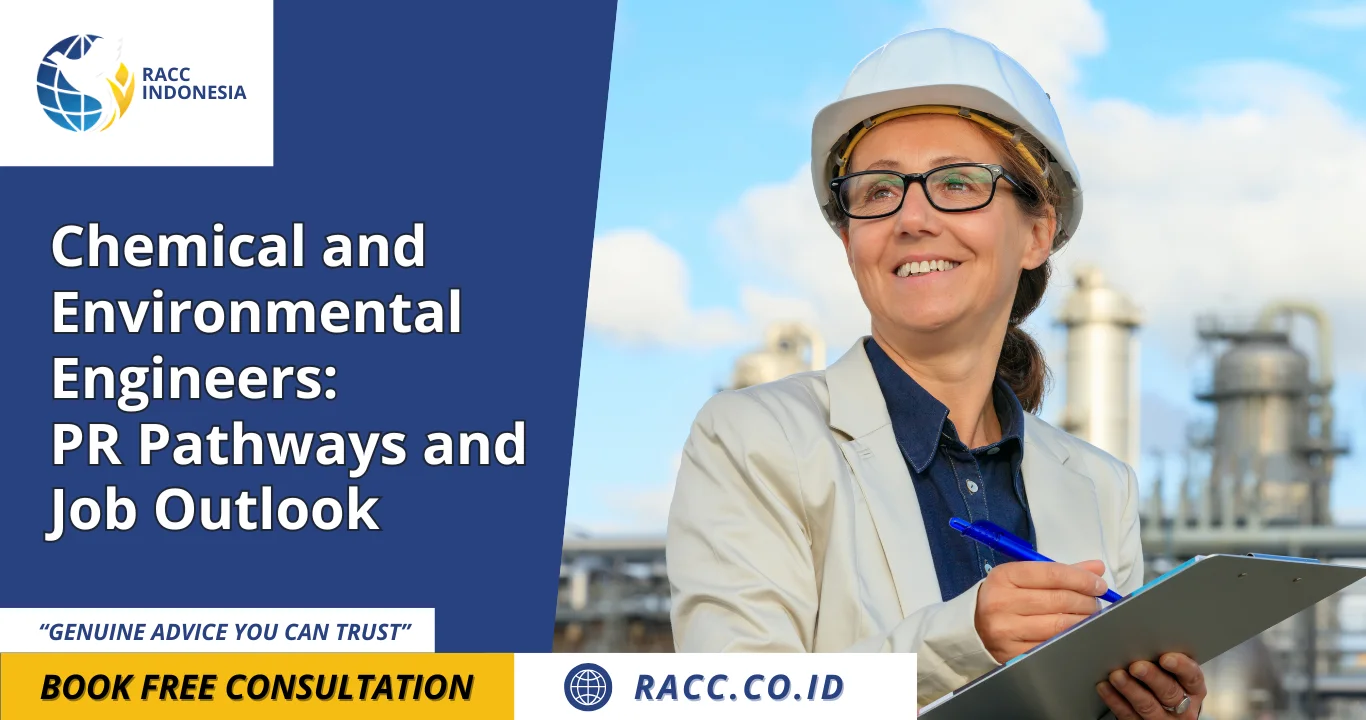
Rising Demand for Chemical & Environmental Engineers in Australia
Australia is experiencing a growing need for Chemical Engineers (ANZSCO 233111) and Environmental Engineers (ANZSCO 233915) across multiple critical sectors. As the country continues to expand its energy, mining, manufacturing, and sustainability-driven industries, demand for engineering professionals with strong technical and problem-solving capabilities has become increasingly urgent.
Chemical Engineers play a central role in industrial processes, renewable energy development, waste treatment, and large-scale production systems. Meanwhile, Environmental Engineers are essential as Australia strengthens its focus on climate resilience, water security, pollution control, and sustainable infrastructure. Government and private industries are investing heavily in environmental sustainability programs, creating long-term career opportunities in both metropolitan and regional areas.
Because these engineering occupations consistently appear on Australia’s skilled occupation lists, they are highly relevant for skilled migration and Permanent Residency (PR) pathways. With strong job growth projections and a national push toward cleaner and more efficient industries, Chemical and Environmental Engineers continue to be among the most sought-after technical professionals in Australia’s evolving workforce landscape.
Understanding the Occupations
Chemical and Environmental Engineers contribute to some of Australia’s most important industries: energy, resources, water management, manufacturing, and environmental protection. Although both roles fall under the engineering discipline, each occupation has a distinct scope of work, industry focus, and skill requirements.
Chemical Engineer (ANZSCO 233111)
Chemical Engineers design, develop, and optimise industrial processes that convert raw materials into valuable products. Their work spans across traditional and emerging sectors, from petrochemicals and mining to renewable energy and advanced manufacturing.
Key Responsibilities:
- Designing and improving chemical production processes
- Ensuring safety and efficiency in industrial operations
- Managing large-scale manufacturing plants
- Developing new materials and energy solutions
- Overseeing quality control and regulatory compliance
Key Industries in Australia:
- Mining & mineral processing
- Oil & gas, petrochemical, chemical production
- Food & beverage manufacturing
- Renewable energy (hydrogen, bioenergy)
- Pharmaceuticals and advanced materials
Salary Range:
AUD 85,000–140,000+ per year depending on experience and region.
Environmental Engineer (ANZSCO 233915)
Environmental Engineers focus on protecting natural resources and improving environmental quality. Their role is increasingly important as Australia strengthens its sustainability targets and climate resilience strategies.
Key Responsibilities:
- Designing waste management and pollution control systems
- Conducting environmental impact assessments (EIA)
- Managing water treatment and purification projects
- Developing sustainability and rehabilitation programs
- Advising industries on environmental regulations and compliance
Key Sectors in Australia:
- Water and wastewater treatment
- Waste management and recycling
- Infrastructure and urban planning
- Renewable energy projects
- Mining rehabilitation and land restoration
Salary Range:
AUD 75,000–125,000+ per year depending on state and industry demand.
Key Differences Between These Roles
- Chemical Engineers specialise in industrial process design and optimisation.
- Environmental Engineers focus on environmental protection, compliance, and sustainability.
- Both occupations are highly technical, in-demand, and strongly aligned with Australia’s long-term workforce needs.
Skills Assessment & Qualification Requirements
To work and migrate to Australia as a Chemical Engineer or Environmental Engineer, overseas-trained professionals must complete a skills assessment through Engineers Australia (EA), the official authority responsible for evaluating engineering qualifications and professional competency.
A positive skills assessment is mandatory for most skilled visa pathways, including Subclass 189, 190, and 491.
Skills Assessment Authority: Engineers Australia (EA)
Engineers Australia assesses whether your academic qualifications and work experience meet the standards of an Australian professional engineer. There are two main assessment routes:
a. Accredited Qualifications Pathway
For applicants who graduated from universities accredited under:
- Washington Accord (most engineering degrees from the US, UK, Canada, and some Asian universities)
If your degree is on the Washington Accord list, you can receive a faster assessment.
b. Competency Demonstration Report (CDR) Pathway
For applicants whose qualifications are not accredited internationally.
You must submit:
- Three Career Episodes
- Summary Statement
- Continuing Professional Development (CPD) list
- Proof of employment and technical responsibilities
The CDR pathway is detailed and evidence-heavy, but it allows engineers from any country to be assessed fairly.
Required Documents
All applicants must prepare:
- Bachelor’s degree certificate and academic transcript
- Passport identity page
- CV/Resume
- English test results (IELTS/PTE/OET equivalent)
- Employment letters, contracts, or reference statements (if claiming work experience points)
- Professional licenses or registrations (if applicable)
For the CDR pathway, additional technical documentation is required.
English Requirement
Applicants must meet EA’s English standard through one of the following:
- IELTS Academic: Minimum 6.0 in each band
- PTE Academic: Equivalent score to IELTS 6
- OET: Minimum C in each component
Some exemptions apply only if the applicant studied in certain English-speaking countries.
Why Skills Assessment Is Mandatory
A valid Engineers Australia assessment is required to:
- Apply for a Skilled Visa (189, 190, 491)
- Claim engineering work experience points
- Be recognised as a Professional Engineer in Australia
- Increase employability with Australian companies
Completing this assessment ensures that your engineering skills and academic background meet Australian professional standards, providing a solid foundation for both migration and career progression.
PR Pathways for Engineers
Both Chemical Engineers (ANZSCO 233111) and Environmental Engineers (ANZSCO 233915) enjoy strong Permanent Residency (PR) prospects in Australia. These occupations frequently appear on the Skilled Occupation List, giving applicants access to multiple points-tested and employer-sponsored visa pathways.
Your choice of pathway depends on your points score, skills assessment status, English ability, and whether you have employer or state sponsorship opportunities.
Skilled Independent Visa (Subclass 189)
- Permanent Residency (PR)
- No sponsor or nomination required
- Points-based selection
- Highly competitive due to nationwide demand
This is the most flexible PR pathway, but applicants must have a strong points score, especially for engineering occupations.
Skilled Nominated Visa (Subclass 190)
- Permanent Residency (PR)
- Requires nomination from an Australian state or territory
- Priority for occupations in state demand lists
Many states frequently nominate engineers due to shortages in infrastructure, energy, environmental management, and sustainability projects.
Skilled Work Regional Visa (Subclass 491)
- 5-year provisional visa with a pathway to PR
- Requires state nomination or eligible family sponsorship
- Additional points for choosing a regional area
- Faster processing for applicants targeting regional shortages
Regions rely heavily on engineers for mining, water systems, environmental rehabilitation, and clean energy expansion.
Employer-Sponsored Pathways
For engineers receiving job offers from Australian employers.
a. Temporary Skill Shortage Visa (Subclass 482)
- Work visa for up to 4 years
- Leads to PR options through employer nomination
- Useful for applicants who prefer to migrate through employment first
b. Employer Nomination Scheme (Subclass 186)
- Direct Permanent Residency
- Requires sponsorship from an approved employer
- Often used by engineers already working on a 482 visa
c. Regional Employer Sponsored Visa (Subclass 494)
- 5-year visa with a direct PR pathway
- Ideal for engineers willing to work in regional industries such as mining, water infrastructure, and environmental management
Which States Currently Prioritise Engineers?
Demand is consistently strong in:
- Western Australia (WA) – mining, energy, process engineering
- Queensland (QLD) – environmental and chemical roles in resources and water sectors
- New South Wales (NSW) – infrastructure, renewable energy, manufacturing
- Victoria (VIC) – environmental sustainability, waste management
- South Australia (SA) – hydrogen energy and green projects
Australia’s long-term infrastructure and sustainability projects ensure that both Chemical and Environmental Engineers continue to receive strong migration support across multiple visa subclasses.
Job Market & Salary Outlook in Australia
Chemical and Environmental Engineers are consistently in demand across Australia due to the country’s expanding industrial sector, environmental regulations, and long-term investment in sustainability and clean energy. This demand is reflected in strong job availability, competitive salaries, and increasing opportunities in both metropolitan and regional areas.
Job Demand by State
Western Australia (WA)
- Strongest demand due to mining, mineral processing, chemicals, and energy projects
- High salaries and relocation incentives in regional sites
Queensland (QLD)
- Growth in resources, water management, and environmental compliance
- Significant hiring for environmental monitoring and rehabilitation
New South Wales (NSW)
- Large-scale infrastructure projects requiring environmental oversight
- Industrial manufacturing and waste management roles
Victoria (VIC)
- Strong demand in sustainability, waste reduction, and environmental engineering
- Opportunities in consulting firms and government agencies
South Australia (SA)
- Rapid growth in hydrogen, renewable energy, and advanced manufacturing
- Increasing demand for process and environmental engineers
Industry Growth Trends
Chemical and Environmental Engineers benefit from growth in several expanding sectors:
- Renewable Energy: Hydrogen, solar, wind, bioenergy
- Mining & Resources: Mineral processing, environmental impact management
- Manufacturing: Chemical production, food and beverage processing
- Water & Waste Management: Water treatment plants, pollution control, recycling systems
- Infrastructure & Sustainability: Green buildings, environmental rehabilitation, climate resilience
These long-term industries guarantee stable employment demand for the next decade.
Salary Ranges
Salaries vary based on experience, industry, and location. On average:
Chemical Engineer:
- Entry-level: AUD 70,000–90,000
- Mid-career: AUD 95,000–130,000
- Senior roles: AUD 130,000–160,000+
Environmental Engineer:
- Entry-level: AUD 65,000–85,000
- Mid-career: AUD 90,000–120,000
- Senior roles: AUD 120,000–145,000+
Engineers working in mining, resources, or energy sectors typically earn higher-than-average salaries, especially in regional and remote locations.
Regional vs Metropolitan Opportunities
- Metropolitan Areas: Higher competition but more consulting, design, and policy roles
- Regional Areas: Higher vacancies, faster hiring processes, and salary premiums due to workforce shortages
Regional opportunities often provide stronger incentives and may align with visa pathways such as Subclass 491 or 494.
Australia’s ongoing transition toward sustainability, renewable energy, and responsible industrial development ensures that both Chemical and Environmental Engineers will remain among the most essential and stable professions in the national job market.
How RACC Indonesia Can Assist
Migrating to Australia as a Chemical or Environmental Engineer involves several important steps, from securing a positive skills assessment to preparing a strong visa application. RACC Indonesia provides structured guidance to help you navigate each stage efficiently and increase your chances of success.
Qualification Mapping & PR Strategy
Every applicant’s background and goals are different. RACC helps you:
- Map your education and experience to the most suitable visa pathway
- Identify states with a higher demand for your engineering field
- Estimate your points for skilled migration (Subclass 189, 190, 491)
- Explore employer-sponsored options if relevant
This personalised strategy allows you to target the pathways with the highest chance of success.
Visa Application Support
Our team can assist with preparing and lodging:
- Skilled visas: 189, 190, 491
- Employer-sponsored visas: 482, 186, 494
- Regional pathways and PR transition options
RACC ensures your documents meet immigration standards and helps avoid common mistakes that can delay processing.
Consultation & Ongoing Support
RACC Indonesia provides consultations to help you:
- Understand your eligibility
- Evaluate costs and timelines
- Plan your engineering career pathway in Australia
We offer continued support until your application is complete, providing clarity and confidence at every step.