Introduction
A significant policy change has been introduced for the Training visa (subclass 407), affecting how future applicants must prepare and submit their applications.
Starting 11 March 2026, the application process has become more structured. Applicants can no longer submit the nomination and visa application at the same time. Instead, the nomination must now be fully approved before the visa application can be lodged.
This change may appear procedural, but it has major implications for processing timelines, planning strategies, and visa transitions. Applicants who previously relied on concurrent lodgement may now face significantly longer overall waiting periods if they do not adjust their planning.
This article explains what has changed, why it matters, and how applicants and employers should adapt their strategy when planning for the Subclass 407 visa.
What Is the Subclass 407 Training Visa?
The Training visa (subclass 407) allows individuals to travel to Australia to participate in workplace-based training aimed at improving their skills in a specific occupation.
The visa is typically used for:
- Occupational training to enhance professional skills
- Structured workplace training programs
- Professional development in regulated industries
Unlike student visas, the 407 visa focuses on practical training within an Australian workplace, usually sponsored by an employer or organization.
The Key Change: Nomination Must Be Approved First
Previously, employers and applicants often submitted two applications at the same time:
- Employer nomination
- Visa application
This practice is known as concurrent lodgement.
However, according to updates from the Australian Department of Home Affairs, this process has changed.
Effective 11 March 2026, the nomination must now be:
- lodged,
- assessed, and
- approved
before the visa application can be submitted.
Official reference:
https://immi.homeaffairs.gov.au/news-media/archive/article?itemId=1392
This effectively creates two separate stages in the process.
Why This Change Matters: Processing Time Impact
The main consequence of this change is longer total waiting time.

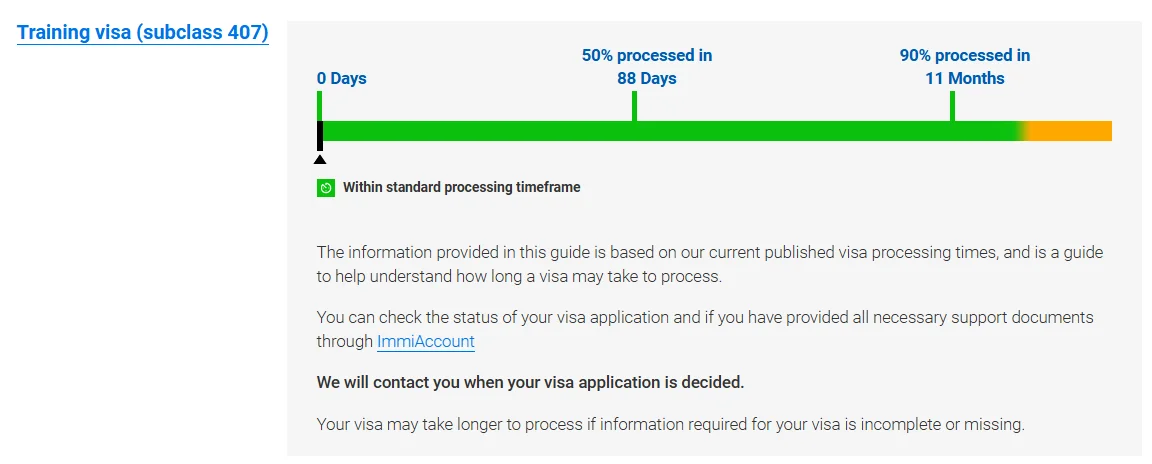
Current processing statistics for the Subclass 407 visa show:
- 50% of applications processed in 88 days
- 90% of applications processed in 11 months
However, these timelines only begin after the visa application is lodged.
Because applicants must now wait for nomination approval first, the total processing time can become significantly longer.
Example Scenario
Consider the following realistic timeline:
- Nomination processing: 2–3 months
- Visa processing (90th percentile): up to 11 months
Total potential waiting period:
13–14 months or more
For many applicants, this means the overall process could take over a year from start to visa decision.
Strategic Implications for Applicants
This policy shift forces applicants to rethink how they plan their visa timeline.
Previously, concurrent lodgement allowed applicants to start the visa processing clock immediately. That advantage is now gone.
Applicants must now carefully manage several factors:
1. Start the Nomination Process Earlier
Employers and applicants should initiate the nomination process as early as possible.
Because visa processing cannot begin until nomination approval is granted, delays at this stage can significantly extend the overall timeline.
2. Prepare Documents During the Nomination Phase
The nomination waiting period can still be used productively.
Applicants should ensure that their visa application is fully prepared and decision-ready, including:
- Training plans
- Skills documentation
- Identity documents
- English language evidence (if applicable)
Having a complete application ready ensures that the visa can be lodged immediately once nomination approval is granted.
3. Review Current Visa Status Carefully
For applicants currently in Australia, the longer processing timeline introduces a new risk: visa gaps.
Applicants transitioning from another visa must carefully review their current visa expiry date and how it aligns with the new timeline.
In some cases, bridging visa planning may become more important than before.
Why the Government Introduced This Change
Although the official announcement does not detail every policy rationale, the separation of nomination and visa stages likely aims to:
- Strengthen employer accountability
- Improve integrity in workplace training programs
- Ensure training nominations are properly assessed before visa applications proceed
This reflects a broader trend in Australian migration policy toward stricter procedural integrity and compliance checks.
What Applicants Should Do Now
If you are planning to apply for the Training visa (subclass 407), the key takeaway is simple:
Do not wait until the last minute to start the nomination process.
Because nomination approval is now a prerequisite for visa lodgement, applicants should begin preparing significantly earlier than before.
Practical steps include:
- Confirm employer willingness to sponsor training
- Prepare a structured training plan
- Begin the nomination application early
- Ensure all visa documents are ready in advance
Conclusion
The rule change effective 11 March 2026 represents a major shift in the application process for the Subclass 407 Training Visa.
The removal of concurrent lodgement means applicants must now complete the nomination approval stage before submitting the visa application, potentially adding several months to the overall timeline.
For prospective applicants, the key adjustment is earlier preparation and careful visa planning. Understanding the new timeline is essential to avoid delays that could disrupt training opportunities or career plans.
Anyone considering the 407 visa should now approach the process with a longer planning horizon and a well-prepared application strategy.
Book a Consultation to Plan Your 407 Visa Strategy
The recent changes to the Training visa (subclass 407) process mean that timing and preparation have become more important than ever. Since visa applications can only be lodged after nomination approval, applicants must carefully plan their visa timeline, employer nomination, and supporting documents.
For many applicants, the challenge is not only understanding the rules but also structuring a clear and compliant training pathway that meets the requirements of the Australian Department of Home Affairs.
A consultation can help clarify important questions such as:
- Whether your occupation is suitable for a 407 training program
- How to structure a compliant training plan with your employer
- When to start the nomination process under the new rules
- How the longer timeline may affect your current visa status
At RACC Indonesia, we assist applicants and employers in evaluating their eligibility and preparing structured applications for Australian training visas.
If you are considering applying for the Subclass 407 visa and want to understand the best strategy under the new rules, you can schedule a consultation with our team.
This allows you to review your situation, assess the timeline, and prepare a clear plan before starting the nomination and visa process.