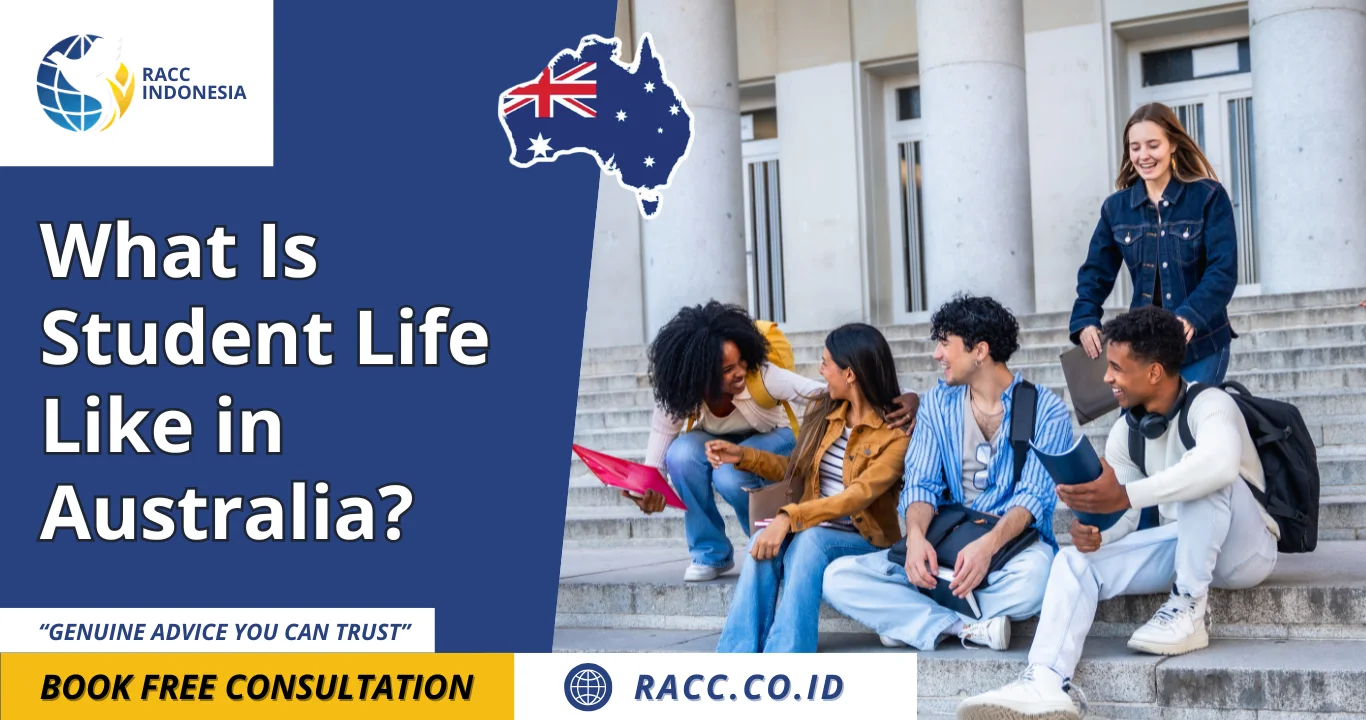
Many students imagine life in Australia as a balance of high wages, flexible study, and an active social environment.
The reality is more structured.
Student life in Australia involves academic discipline, financial responsibility, cultural adjustment, and independent living. It offers strong opportunities, but it also demands maturity and planning.
Understanding what daily life actually looks like helps you decide whether you are prepared, not just academically, but practically.
Academic Environment: How Classes Actually Work
Australia’s academic culture is structured but independent. Compared to many education systems, there is less classroom supervision and more responsibility placed on the student.
You are expected to manage your own time.
Teaching Style
Classes often include:
- Lectures (theory-focused sessions)
- Tutorials (smaller discussion-based classes)
- Workshops or labs (for practical subjects)
Participation is encouraged. In many courses, contributing to the discussion affects your internal marks.
Silence is not automatically seen as respect. Engagement is expected.
Assessment Structure
Assessment typically includes:
- Written assignments
- Research reports
- Group projects
- Presentations
- Final exams
Continuous assessment is common. Your grade is rarely based on a single final exam.
Deadlines are strict. Extensions require formal requests with valid reasons.
Independent Learning
Students are expected to:
- Read materials before class
- Conduct independent research
- Manage referencing properly
- Avoid plagiarism
Academic integrity rules are taken seriously. Even unintentional plagiarism can lead to penalties.
Attendance and Compliance
Under the Student visa (subclass 500), students must:
- Maintain satisfactory course progress
- Meet attendance requirements (especially in vocational and English programs)
Failing subjects repeatedly or not attending classes can affect visa status.
Reality Check
Academic pressure increases if you are also working part-time.
Time management becomes critical. Students who underestimate workload often struggle during exam periods.
Student life is not academically relaxed. It requires consistent effort.
Work and Study Balance: What It Actually Feels Like
Many international students plan to work while studying. Legally, this is allowed under the Student visa (subclass 500), which permits:
- 48 hours per fortnight during study periods
- Unlimited hours during official breaks
On paper, this seems manageable. In practice, it requires discipline.
Typical Weekly Structure
A full-time student may have:
- 15 to 20 class hours per week
- An additional 10 to 20 hours of self-study
If you also work 20 to 24 hours weekly, your schedule becomes dense.
Example:
- Weekdays: classes + study
- Evenings or weekends: work shifts
During assignment or exam periods, this becomes physically and mentally demanding.
Common Part-Time Jobs
Students typically work in:
- Hospitality
- Retail
- Warehousing
- Cleaning
- Delivery services
Shifts often include evenings and weekends.
Weekend shifts may pay more, but they reduce recovery time before the academic week begins.
Income vs Energy Trade-Off
Working maximum allowed hours every fortnight can increase income. It also increases:
- Fatigue
- Reduced study time
- Stress during assessment periods
Students who rely entirely on work income for survival often experience academic pressure.
Work is meant to support living costs, not replace financial preparation.
Practical Adjustment
In the first 1 to 3 months after arrival, students usually experience:
- Job search period
- Housing adjustment
- Academic adaptation
- Cultural adjustment
Balancing all four at once requires realistic expectations.
Students who plan conservatively adjust faster than those who assume immediate financial stability.
Living Costs and Accommodation: Where and How Students Actually Live
Accommodation is usually the largest monthly expense.
Your lifestyle will largely depend on the city you choose and whether you share housing.
Major Cities: Higher Cost Environment
In cities such as Sydney and Melbourne:
- Shared rent often ranges from AUD 250 to 400 per week
- Private studio apartments can exceed AUD 450 to 600 per week
- Transport costs are higher
- Competition for housing is strong
Students often share apartments with 2 to 4 people to reduce rent.
Finding affordable accommodation can take time, especially before semester intake periods.
Moderate-Cost Cities
In cities such as Adelaide and Perth:
- Rent may be 15 to 25 percent lower compared to Sydney
- Less housing competition
- Slightly lower transport costs
However, part-time job availability may vary depending on local demand.
Lower rent does not automatically mean easier financial conditions.
Common Accommodation Types
Shared Apartment
Most common option. Reduces cost but requires compromise on privacy.
Student Accommodation
Purpose-built housing near campus. More structured but often more expensive.
Homestay
Living with a local family. Includes meals in some cases. Suitable for students needing cultural adjustment support.
Additional Living Expenses
Monthly costs typically include:
- Groceries
- Utilities
- Internet
- Transport
- Phone plan
- Basic personal expenses
Total monthly living costs in major cities can range between AUD 1,900 and 2,800, depending on lifestyle.
Financial stress is one of the biggest adjustment challenges for international students.
Planning conservatively before arrival reduces early-stage pressure.
Social Life and Multicultural Environment: What Integration Actually Looks Like
Australia is one of the most multicultural study destinations globally.
University campuses include students from:
- India
- China
- Nepal
- Philippines
- Vietnam
- Indonesia
- Europe
- South America
Diversity is normal. Cultural mixing is expected.
Campus Culture
Most universities offer:
- Student clubs and societies
- Academic associations
- Cultural communities
- Sports clubs
- Networking events
Joining clubs is one of the fastest ways to build connections.
However, social integration does not happen automatically. Students who remain only within their own nationality group often limit networking opportunities.
Friendship Patterns
Friendships typically form through:
- Group assignments
- Shared housing
- Part-time work
- Clubs and extracurricular activities
Australian social culture tends to be:
- Direct
- Informal
- Independent
Students may need time to adjust to communication styles.
Weekend Lifestyle
Common activities include:
- Cafés and restaurants
- Beaches (especially in Sydney and Perth)
- Parks and outdoor sports
- Road trips
- Cultural festivals
However, many international students spend weekends working part-time.
Social life depends heavily on financial capacity and time availability.
Cultural Adjustment
Students often experience:
- Initial excitement
- Followed by culture fatigue
- Homesickness
- Language exhaustion
This adjustment period is normal.
Students who actively engage socially adapt faster than those who isolate themselves.
Transportation and Daily Convenience: How Easy Is Daily Life?
Australia’s major cities are developed and structured, but daily convenience depends heavily on where you live.
Public Transport
Cities such as Sydney and Melbourne offer:
- Train networks
- Trams (Melbourne)
- Buses
- Integrated ticketing systems
Public transport is reliable but not cheap.
Students may be eligible for limited transport concessions depending on state regulations and visa conditions.
Commute time matters. Living far from campus may reduce rent but increase transport cost and fatigue.
Moderate and Regional Cities
In cities such as Adelaide and Perth:
- Transport systems are smaller
- Traffic congestion is lower
- Driving is more common
Some regional areas may require a car for flexibility.
Choosing accommodation close to campus or work reduces daily stress.
Daily Essentials
Access to:
- Supermarkets
- Pharmacies
- Clinics
- Banks
- Mobile providers
is generally convenient in urban areas.
Most payments are cashless. Card and digital payment systems dominate.
Healthcare Access
International students must maintain:
Overseas Student Health Cover (OSHC)
OSHC covers:
- Doctor visits
- Basic hospital treatment
- Some prescription costs
However, not all services are fully covered. Students should understand policy limitations.
Practical Reality
Daily life is efficient but expensive.
Convenience increases with budget. Students trying to minimise rent by living far from campus often trade savings for commute stress.
Logistical planning matters more than lifestyle assumptions.
Mental Adjustment and Culture Shock: The Hidden Side of Student Life
The academic and financial aspects of studying in Australia are visible. The psychological adjustment is less discussed but equally important.
Most international students experience an adjustment cycle.
Phase 1: Initial Excitement
The first weeks often include:
- Exploring the city
- Meeting new people
- Experiencing independence
This phase is usually positive and motivating.
Phase 2: Reality Adjustment
After the initial excitement fades, challenges become clearer:
- Academic workload
- Financial pressure
- Part-time job search stress
- Language fatigue
Students who underestimate costs or workload feel pressure quickly.
Language and Communication Fatigue
Even students with strong English scores often experience:
- Slower processing in fast conversations
- Difficulty with slang or accents
- Hesitation in class participation
This improves with exposure but requires effort.
Financial Stress
When part-time income does not immediately stabilise, anxiety increases.
Students who arrive with minimal financial buffer are more vulnerable during this period.
Financial pressure can affect:
- Academic performance
- Sleep quality
- Social engagement
Homesickness
Distance from family support systems is significant.
Common triggers:
- Cultural holidays
- Illness
- Academic setbacks
Universities provide counseling services, but students must take the initiative to access them.
Adaptation Strategy
Students who adapt successfully usually:
- Build structured routines
- Join campus communities
- Manage budgets conservatively
- Avoid relying entirely on part-time income
Adjustment is normal. Lack of preparation makes it harder.
Pathways After Graduation: What Happens Next?
Student life in Australia does not exist in isolation. Many students consider what comes after graduation.
Australia maintains an education-to-skilled migration pipeline, but it is now more structured and selective.
Temporary Graduate Visa
After completing eligible qualifications, graduates may apply for the Temporary Graduate visa (subclass 485).
Recent reforms include:
- Age limit reduced to 35 years (for most streams)
- Post-Study Work extension programs removed
- Duration aligned more closely with skilled occupation demand
- Replacement stream abolished
The system now prioritises qualifications aligned with workforce needs.
Skilled Migration Pathways
After gaining work experience, graduates may transition to:
- Skilled Independent visa (subclass 189)
- Skilled Nominated visa (subclass 190)
- Skilled Work Regional visa (subclass 491)
- Skills in Demand visa (subclass 482)
However, migration is competitive and occupation-driven.
Not all courses lead to strong migration outcomes. Course selection should consider long-term professional relevance.
Data Insight
Recent statistics show:
- Nearly half of former student visa holders transition to the Temporary Graduate visa
- Many later move into skilled migration categories
This confirms that the pathway remains active, but it is no longer volume-based. It is qualification and skill-driven.
Strategic Reality
Student life should not be chosen solely for migration outcomes.
The strongest profiles:
- Choose academically logical programs
- Gain relevant work experience
- Maintain a strong compliance history
- Build employable skills
Education remains the foundation. Migration is the outcome of alignment, not assumption.
Conclusion
Student life in Australia is structured, independent, and opportunity-based.
It offers:
- High-quality education
- Multicultural exposure
- Work opportunities
- Professional pathways
It also requires:
- Financial preparation
- Time management discipline
- Emotional resilience
- Clear long-term planning
Australia is not an easy shortcut. It is a structured system that rewards preparation and consistency.
If you want to assess whether you are realistically prepared for student life in Australia, RACC Indonesia can help you evaluate your academic, financial, and long-term planning position before you apply.
Preparation determines experience.