What Is the Regional Sponsored Migration Scheme (RSMS)?
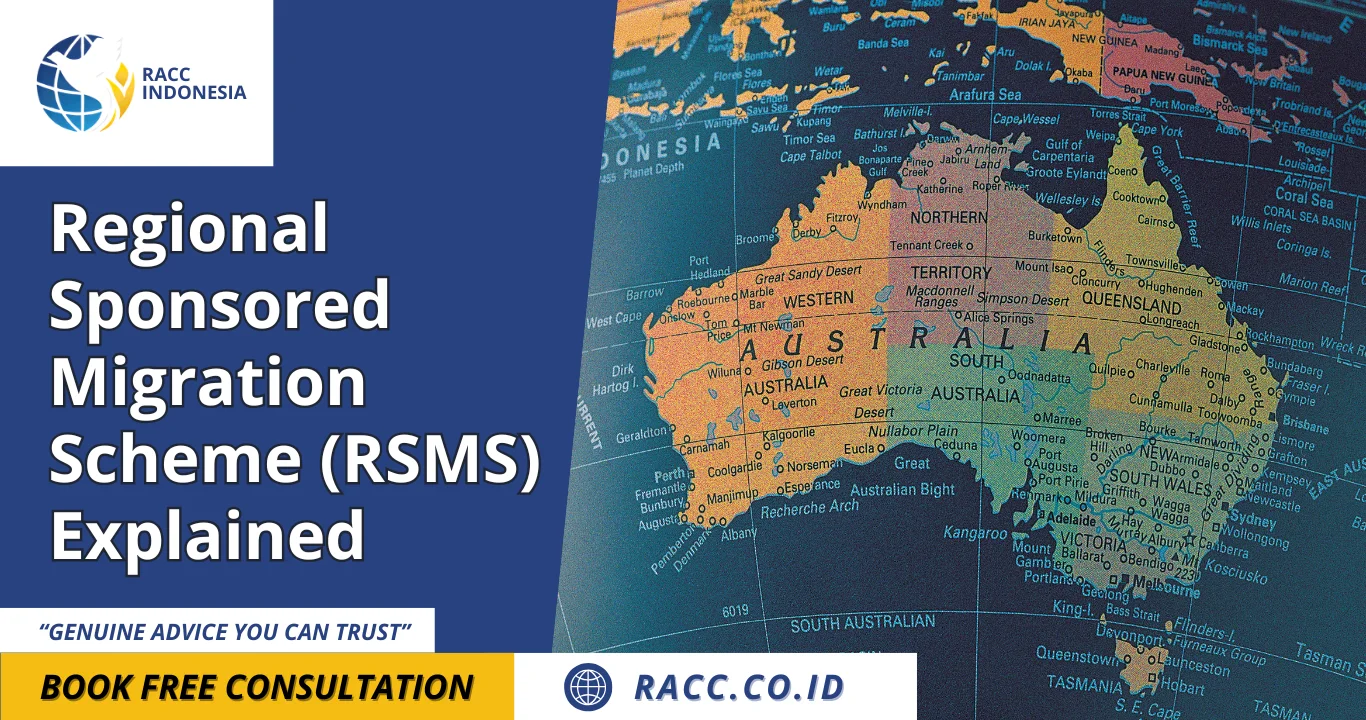
The Regional Sponsored Migration Scheme (RSMS) is part of Australia’s effort to attract skilled workers to live and work in regional areas, places outside major cities like Sydney, Melbourne, and Brisbane.
Originally introduced as the Subclass 187 visa, the RSMS has now evolved into the Subclass 494 (Skilled Employer Sponsored Regional, Provisional) visa, which serves the same purpose:
- to fill labour shortages in regional Australia
- to help regional employers sponsor overseas workers
- and to provide a clear pathway to Permanent Residency (PR) through the Subclass 191 visa.
This scheme gives both employers and applicants significant advantages. Employers in regional areas can fill genuine skill gaps, while skilled workers can secure long-term employment with a direct PR pathway after working in the regional area for three years.
Related reading: Australia Regional Migration Pathways
How the RSMS (Subclass 494) Works
The RSMS pathway, now operating under the Subclass 494 visa, connects regional employers with skilled overseas workers who can fill positions that local candidates cannot. It’s a temporary visa with a clear path to PR — designed to strengthen Australia’s regional workforce.
Here’s how the process typically works:
| Stage | Description | Key Requirements |
|---|---|---|
| 1. Employer Sponsorship | A regional employer applies to become an approved sponsor and nominates a skilled position that cannot be filled locally. | The job must be located in a Designated Regional Area and listed on the Regional Occupation List. |
| 2. Skills & Experience | The applicant must show that they are qualified and experienced for the nominated role. | Usually at least 3 years of full-time work experience in the occupation and a positive skills assessment are required. |
| 3. Visa Application & Grant | Once sponsorship and nomination are approved, the worker applies for the Subclass 494 visa. | Must meet English language, age (<45), and health criteria. |
| 4. Work and Residency Period | The visa holder must live and work in the regional area for at least 3 years with the sponsoring employer. | This ensures genuine contribution to regional communities. |
| 5. Permanent Residency (PR) via Subclass 191 | After fulfilling work and income requirements, the applicant becomes eligible for Permanent Residency. | Must have worked regionally for 3 years and met income thresholds. |
The process rewards consistency and commitment — meaning that those who stay, work, and contribute to regional development are granted permanent residency as recognition.
Related reading: Skills in Demand (SID) Visa to PR Transition — Subclass 482
Key Benefits of the RSMS Pathway
Choosing the Regional Sponsored Migration Scheme (RSMS), now the Subclass 494 visa, offers several strong advantages, especially for applicants seeking a faster and more achievable PR route compared to metro-based pathways.
Here are the main benefits:
1. Clear Pathway to Permanent Residency
After working for three years in a designated regional area under the Subclass 494 visa, you can apply for Permanent Residency (Subclass 191), without needing employer nomination again.
This makes RSMS one of the most straightforward employer-to-PR transitions available.
2. Priority Processing for Regional Applicants
Regional visas are given processing priority by the Department of Home Affairs. This means applications lodged under regional sponsorship often move faster than metro sponsorship or independent skilled migration streams.
3. Lower Competition
Since fewer applicants target regional areas, getting employer sponsorship is generally easier and faster. Regional employers often have higher demand for skilled workers, especially in healthcare, construction, IT, and hospitality.
4. Extra Incentives for Regional Living
Living in a regional area comes with additional migration benefits such as:
- Longer post-study work rights for graduates
- Extra PR points for regional study
- Access to state or territory nomination opportunities
Related reading: The Easiest PR Pathways in Australia — 2025 Update
Eligibility Checklist
To qualify for the Regional Sponsored Migration Scheme (RSMS) under the Subclass 494 visa, both the employer and the applicant must meet specific requirements. Here’s a clear summary to help you understand what’s needed before applying:
For Employers
- Must be located in a Designated Regional Area (outside Sydney, Melbourne, and Brisbane).
- Must become an approved sponsor through the Department of Home Affairs.
- Must offer a genuine, full-time position for at least 3 years.
- The occupation offered must be on the Regional Occupation List (ROL).
- Must meet labour market testing requirements, proving that no qualified Australian worker is available for the role.
For Applicants
- Must have a valid job offer from an approved regional employer.
- Must have a positive skills assessment for the nominated occupation.
- Must have at least 3 years of relevant full-time work experience.
- Must be under 45 years old (some exemptions apply).
- Must meet the English language requirement (usually equivalent to IELTS 6.0 in each band).
- Must meet health and character requirements.
- Must commit to living and working in the regional area for a minimum of 3 years.
A Tip: If your goal is PR, maintaining compliance with all 494 visa conditions (employer, location, and duration) is essential, otherwise, you could delay your transition to the Subclass 191 Permanent Residency visa.
Related reading: Australia Employer Sponsored PR — Benefits and Challenges
Why the RSMS Pathway Is Worth Considering
The Regional Sponsored Migration Scheme (RSMS), through the Subclass 494 → 191 PR pathway, is one of Australia’s most practical and reliable routes to Permanent Residency, especially for skilled workers struggling to qualify through the points-based Skilled Migration system.
Here’s why many applicants choose this path:
1. Real Job, Real Security
The RSMS pathway is employer-backed, meaning you already have a secured job before applying. This provides immediate financial stability and a clear migration plan, unlike Skilled Migration which can involve months of waiting for an EOI invitation.
2. Faster and Smoother Path to PR
Because regional applications receive priority processing, your sponsorship and visa decisions often move faster. After working for three years under your 494 visa, you can apply for Permanent Residency (Subclass 191), no new nomination needed.
3. Ideal for Those with Lower PR Points
If you don’t meet the high points threshold for Skilled Migration (Subclass 189/190), the RSMS can be a more achievable alternative, focusing on work experience and employer demand instead of points.
4. A Path to Regional Lifestyle and Growth
Beyond migration benefits, regional areas often offer lower living costs, tight-knit communities, and strong career demand in fields like healthcare, engineering, IT, agriculture, and trades.
Contact RACC Indonesia today for a free eligibility check to see if your occupation qualifies for the Regional Sponsored Migration Scheme (Subclass 494 → 191 PR Pathway).
Related reading: How Employer Sponsorship Leads to PR in Australia