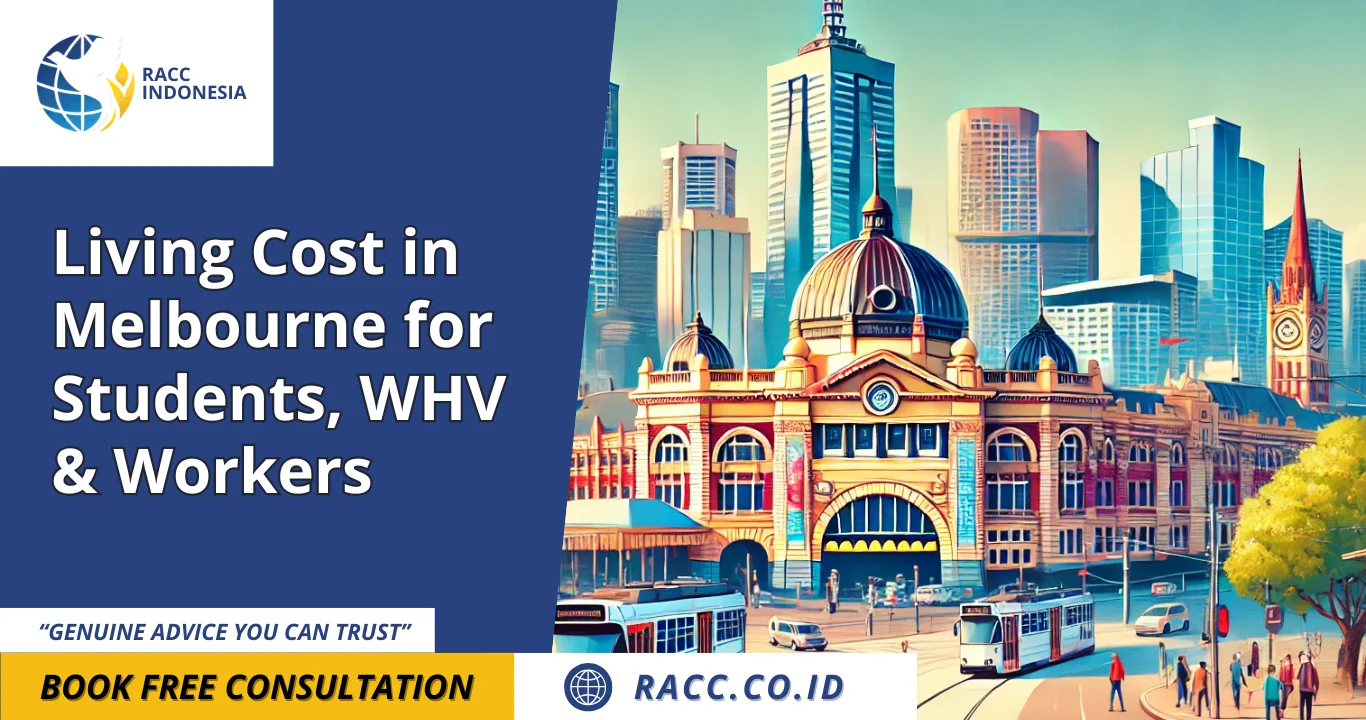
Australia, especially Melbourne, is a top destination for many Indonesians who want to study, join the Working Holiday Visa (WHV) program, or work while exploring a new lifestyle abroad. One of the most common questions is:
“How much does it cost to live in Melbourne?”
The answer varies depending on your lifestyle, accommodation preferences, and daily needs. This guide provides a complete cost breakdown so you can prepare your budget wisely before moving.
Monthly Living Cost Breakdown in Melbourne
Here’s a detailed estimate of typical monthly expenses for students, WHV participants, and workers in Melbourne:
Estimated Monthly Living Costs in Melbourne
| Category | Estimated Monthly Costs (AUD) |
|---|---|
| Accommodation | On-Campus: AUD 1,200 – AUD 1,800 Off-Campus: AUD 950 – AUD 2,200 |
| Food | Groceries: AUD 200 – AUD 500 Eating Out: AUD 15 – AUD 25 per meal (Approx. AUD 180 – AUD 300 for 3 meals/week) |
| Transportation | Public Transport (Myki card): AUD 165 |
| Utilities | Average Monthly Utility Bills: AUD 30 – AUD 100 |
| Study Materials | Estimated at around AUD 50 – AUD 100 |
| Minimum Total | AUD 1,395 |
| Maximum Total | AUD 2,800 |
| Overall Range | AUD 1,395 – AUD 2,800 |
What These Costs Mean for You
For International Students
Accommodation is usually the largest expense. On-campus housing offers convenience and security but is often pricier than off-campus alternatives like shared apartments.
For WHV (Working Holiday Visa) Participants
Many WHV holders prefer to stay in shared houses and cook meals to cut down costs. This allows you to travel and work without overspending.
For Workers in Australia
Understanding your monthly expenses will help you manage your salary wisely, especially in the early stages of your employment journey in Australia.
Money-Saving Tips for Living in Melbourne
- Get a Myki card weekly/monthly pass for cheaper transportation.
- Look for affordable housing through Indonesian communities or platforms like Flatmates.com.au or Facebook groups.
- Cook meals at home instead of eating out frequently.
- Buy groceries from local markets such as Queen Victoria Market or Dandenong Market—they’re often cheaper than large supermarkets.
Final Thoughts
Living in Melbourne doesn’t have to be overwhelming—as long as you plan your finances carefully. Whether you’re heading to Australia for study, WHV, or work, understanding the cost of living is the first step toward a smooth and successful experience.
📌 Frequently Asked Questions (FAQ)
1. How much is the monthly living cost in Melbourne for international students?
The average monthly cost for students in Melbourne ranges from AUD 1,395 to AUD 2,800, depending on your accommodation, food, and lifestyle choices.
2. Is it cheaper to live on-campus or off-campus in Melbourne?
Off-campus housing can sometimes be more affordable, starting from AUD 950/month, while on-campus costs start from AUD 1,200/month, but offer added convenience.
3. How much should I budget for food each month in Melbourne?
Food costs range from AUD 200 to AUD 500/month for groceries. If you eat out, budget around AUD 15–25 per meal or AUD 180–300/month for occasional dining.
4. What is the cost of public transportation in Melbourne?
Public transport using a Myki card costs around AUD 165/month, covering buses, trams, and trains within most city zones.
5. How can I save money while living in Melbourne?
Cook at home, share housing, use weekly/monthly transport passes, and shop at local markets like Queen Victoria Market to reduce your living expenses.